
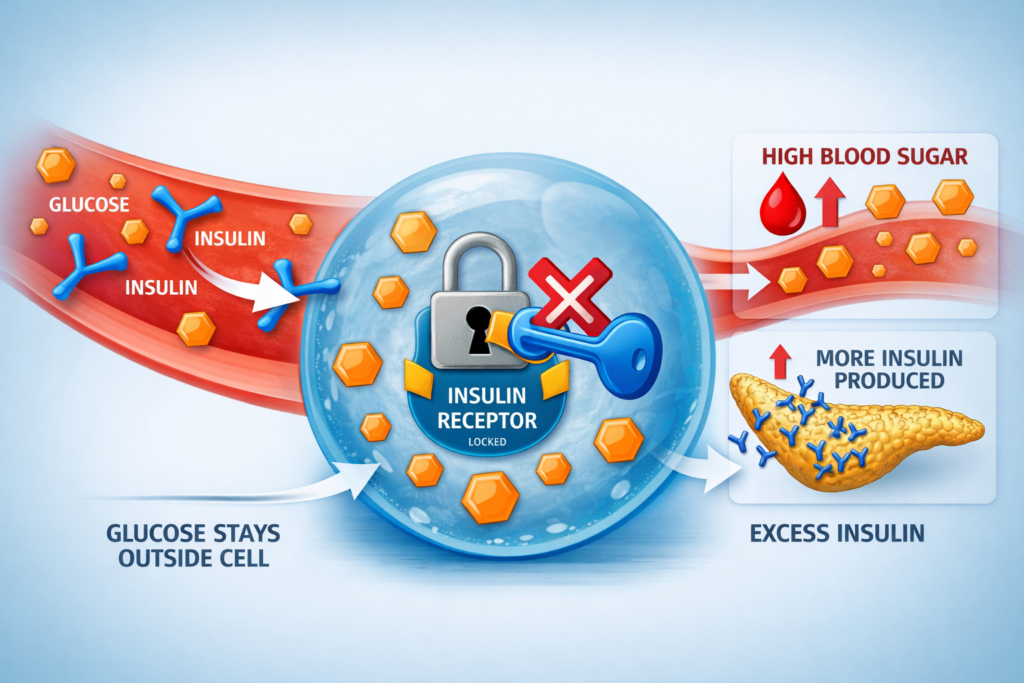
Insulin resistance is a metabolic condition where your body’s cells stop responding properly to insulin—the hormone responsible for moving sugar (glucose) out of your bloodstream and into your cells for energy.
When this happens, your body compensates by producing more insulin. Over time, this leads to chronically elevated insulin levels and rising blood sugar, setting the stage for serious health problems.
Insulin resistance is not a disease on its own—but it is the root driver behind type 2 diabetes, weight gain, metabolic syndrome, and energy crashes.
🔗 Start Here (Recommended Path)
If you’re new to blood sugar control, begin here:
👉 Start Here: Free Blood Sugar Guide
Then continue with the full system:
👉 Blood Sugar Management Guide
⚙️ How Insulin Works (Simple Explanation)
When you eat carbohydrates, your body breaks them down into glucose, which enters your bloodstream.
Your pancreas releases insulin, which acts like a “key” to unlock your cells so glucose can enter and be used for energy.
In a healthy system:
- Insulin works efficiently
- Blood sugar rises and falls smoothly
- Energy levels stay stable
In insulin resistance:
- Cells ignore insulin signals
- Glucose stays in the bloodstream
- The body produces more insulin
- Blood sugar becomes unstable
🚨 What Causes Insulin Resistance?
Insulin resistance develops gradually due to a combination of lifestyle and biological factors.
1. High Sugar & Refined Carbohydrate Intake
Frequent spikes in blood sugar force the body to produce excess insulin.
2. Chronic Overeating
Constant eating (especially snacking) keeps insulin elevated all day.
3. Sedentary Lifestyle
Muscles play a major role in glucose uptake. Low activity reduces insulin sensitivity.
4. Excess Body Fat (Especially Abdominal Fat)
Visceral fat releases inflammatory signals that disrupt insulin function.
5. Poor Sleep & Stress
Elevated cortisol interferes with insulin signaling.
6. Chronic Inflammation
Low-grade inflammation damages cellular response to insulin.
To understand the root drivers in more detail, including how lifestyle and metabolism interact, see: 👉 What Causes Insulin Resistance? (Full Breakdown)
⚠️ Signs & Symptoms of Insulin Resistance
Many people have insulin resistance without realizing it.
Common warning signs include:
- Fatigue after meals
- Sugar cravings
- Weight gain (especially belly fat)
- Brain fog
- Difficulty losing weight
- Energy crashes
- Increased hunger
In more advanced cases:
- Elevated fasting blood sugar
- High triglycerides
- Dark skin patches (acanthosis nigricans)
Many early symptoms are easy to overlook. If you want a full breakdown of warning signs, read: 👉 Signs of Insulin Resistance (Early & Advanced Symptoms)
🔬 Why Insulin Resistance Is Dangerous
Left unmanaged, insulin resistance progresses into:
- Prediabetes
- Type 2 diabetes
- Cardiovascular disease
- Fatty liver disease
- Hormonal imbalances
This is why early intervention is critical.
🔄 Can Insulin Resistance Be Reversed?
Yes — in most cases, insulin resistance is highly reversible.
The key is improving insulin sensitivity through consistent lifestyle changes.
Diet plays a central role in improving insulin sensitivity because it directly affects how much glucose enters your bloodstream and how much insulin your body needs to produce.
If you want a complete breakdown of the best foods, meal structure, and strategies to support insulin resistance, see: Best Diet for Insulin Resistance (Foods That Reverse It)
If you’re ready to take action, follow the full step-by-step plan here:
👉 How to Reverse Insulin Resistance Naturally
🧭 How to Improve Insulin Sensitivity Naturally
Reversing insulin resistance requires consistent lifestyle changes that target diet, movement, and metabolic health.
These natural strategies to improve insulin sensitivity provide a practical, step-by-step approach to stabilising blood sugar levels.
1. Control Blood Sugar Spikes
Focus on whole foods, fiber, and balanced meals.
👉 Learn more:
How to Lower Blood Sugar Naturally
2. Increase Physical Activity
Even light movement improves glucose uptake.
3. Reduce Snacking Frequency
Allow insulin levels to drop between meals.
4. Prioritize Sleep
7–9 hours improves metabolic function.
5. Manage Stress
Lower cortisol = better insulin response.
6. Consider Tracking Your Blood Sugar
Understanding your personal response to food is powerful.
👉 Read:
CGM Guide for Non-Diabetics
For a more complete plan, follow a natural blood sugar management approach that combines nutrition, lifestyle habits, and long-term metabolic support.
🔗 How This Fits Into Blood Sugar Control
Insulin resistance is not just one topic—it’s the foundation of blood sugar dysfunction.
To understand the full system:
Explore Insulin Resistance in Depth
Understanding insulin resistance is the first step. These guides break down symptoms, causes, and how to improve your metabolic health.
❓ Frequently Asked Questions
What is insulin resistance in simple terms?
It’s when your body stops responding properly to insulin, causing blood sugar to rise.
Can you have insulin resistance without diabetes?
Yes. Many people have it years before diabetes develops.
How do you test for insulin resistance?
Common markers include fasting insulin, fasting glucose, and HOMA-IR.
Is insulin resistance reversible?
Yes, especially with diet, exercise, and lifestyle changes.
What foods cause insulin resistance?
Highly processed carbs, sugar, and frequent snacking.
Does fasting help insulin resistance?
Intermittent fasting can improve insulin sensitivity in some individuals.
Is belly fat linked to insulin resistance?
Yes, visceral fat is strongly associated with reduced insulin sensitivity.
How long does it take to reverse insulin resistance?
It varies, but improvements can begin within weeks.
🔗 Related Articles
Fix the Root Cause — Not Just the Symptoms
Insulin resistance is the hidden driver behind blood sugar spikes, weight gain, and energy crashes. The good news? You can reverse it with the right strategy.
Follow a proven, step-by-step system to stabilize your blood sugar and improve insulin sensitivity naturally.
Start the Blood Sugar Management Guide →
Written by Blood Sugar Insider Editorial Team
Health researchers and writers specializing in blood sugar control, metabolic health, and evidence-based nutrition.
Our editorial team creates evidence-based content designed to help readers understand blood sugar balance, prevent spikes, and support long-term metabolic health using science-backed strategies.
Medically Reviewed for Accuracy
This content has been reviewed for accuracy and clarity by the Blood Sugar Insider Medical Review Team, using current clinical research and evidence-based guidelines.
Our process ensures that information related to blood sugar, metabolism, and health strategies aligns with current scientific understanding and evidence-based practices.
View our Editorial Policy →