
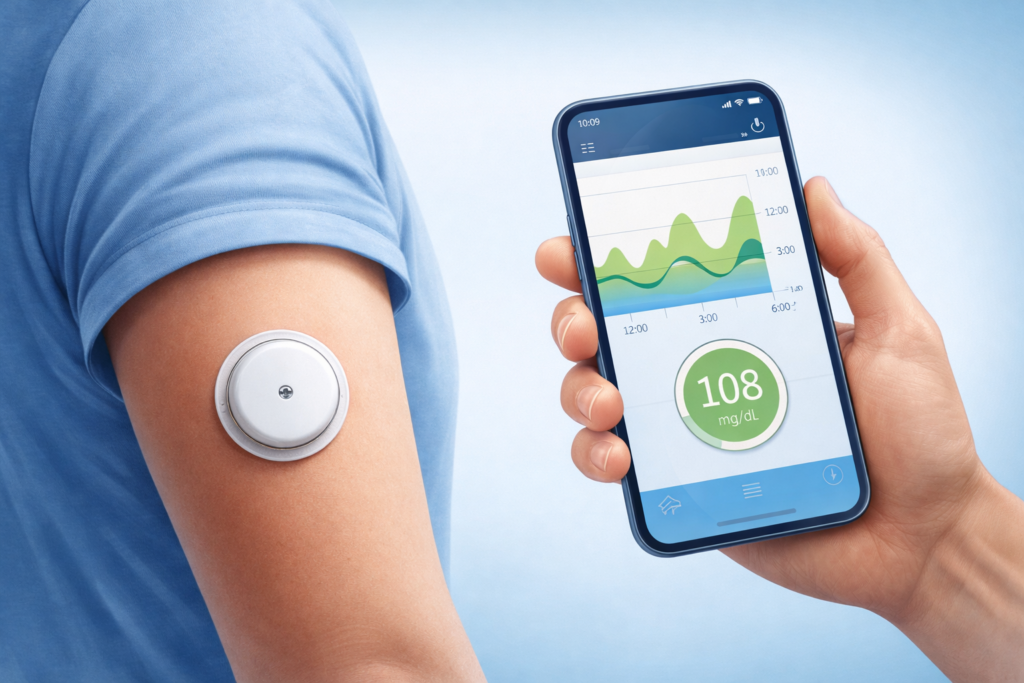
Continuous Glucose Monitors (CGMs) are no longer just for people with diabetes.
Today, many health-conscious individuals are using CGMs to track blood sugar in real time, optimize energy, improve diet choices, and better understand how their body responds to food.
But are CGMs actually useful if you don’t have diabetes?
This guide breaks it down clearly—what they are, how they work, and whether they’re worth it.
🔗 Start Here (Recommended Path)
👉 Start Here: Free Blood Sugar Guide
Then go deeper:
👉 Blood Sugar Management Guide
🧠 What Is a CGM?
A Continuous Glucose Monitor (CGM) is a small wearable device that tracks your blood sugar levels throughout the day and night.
It uses a tiny sensor placed under the skin to measure glucose levels in your interstitial fluid (the fluid between your cells).
Instead of occasional finger-prick tests, a CGM provides:
- Real-time glucose readings
- Trends and patterns
- Alerts for spikes and drops
⚙️ How CGMs Work
A CGM system typically includes:
1. Sensor
Inserted just under the skin (usually on the arm or abdomen)
2. Transmitter
Sends data from the sensor
3. App or Receiver
Displays real-time glucose levels and trends
You can see how your blood sugar responds to:
- Meals
- Exercise
- Stress
- Sleep
🔍 Why Non-Diabetics Are Using CGMs
Even without diabetes, blood sugar fluctuations can impact:
- Energy levels
- Fat storage
- Cravings
- Focus and productivity
CGMs give direct feedback, allowing you to identify:
- Which foods spike your glucose
- How your body reacts to carbs
- The impact of meal timing
🚨 The Hidden Problem: Blood Sugar Spikes
Many people assume their blood sugar is “fine” because they don’t have diabetes.
But spikes and crashes can still happen — often driven by insulin resistance.
👉 Learn the root cause:
What Is Insulin Resistance?
📈 Benefits of Using a CGM
1. Personalized Nutrition
No guessing — you see exactly how foods affect you.
2. Better Energy Stability
Avoid spikes → reduce crashes.
3. Improved Fat Loss
Stable insulin = better fat metabolism.
4. Behavior Change
Real-time feedback drives better habits.
5. Early Warning System
Identify issues before they become serious.
⚠️ Downsides & Limitations
1. Cost
CGMs can be expensive without insurance.
2. Data Overload
Too much data can lead to confusion.
3. Not Perfectly Accurate
CGMs measure interstitial glucose, not blood glucose.
4. Not Always Necessary
Some people benefit more than others.
🎯 Who Should Consider a CGM?
CGMs can be useful if you:
- Experience energy crashes
- Struggle with weight loss
- Have a family history of diabetes
- Want to optimize performance
- Suspect blood sugar issues
❌ Who Might Not Need One?
- People already following a stable, balanced diet
- Those without symptoms or risk factors
- Individuals who may become overly fixated on data
🧭 How to Use a CGM Effectively
Focus on Patterns — Not Single Readings
Look for trends:
- Consistent spikes after certain meals
- Late-night glucose elevation
- Morning fasting levels
Combine with Strategy
Tracking alone is not enough.
👉 Use this alongside a system:
How to Lower Blood Sugar Naturally
🔗 Where CGMs Fit in Your Strategy
CGMs are a tool — not a solution.
They help you understand your body, but long-term results come from:
- Diet
- Movement
- Sleep
- Stress management
For the full system:
❓ Frequently Asked Questions
Can non-diabetics use CGMs?
Yes. Many people use CGMs for health optimization and metabolic awareness.
Are CGMs accurate?
They are generally reliable but slightly less precise than blood tests.
Do CGMs hurt?
Most people report minimal discomfort when applying the sensor.
How long do CGM sensors last?
Typically 7–14 days depending on the device.
Can CGMs help with weight loss?
They can support better decisions, which may lead to improved weight management.
Do you need a prescription for a CGM?
In many countries, yes—but access is expanding.
What is a normal glucose range?
Typically 4.0–7.8 mmol/L (72–140 mg/dL) for non-diabetics.
🔗 Related Articles
Tracking Is Powerful — But Strategy Is Everything
A CGM can show you what’s happening — but it won’t fix your blood sugar on its own. You need a clear system to follow.
Learn how to stabilize your blood sugar, reduce spikes, and improve energy step by step.
Start the Blood Sugar Management Guide →
Written by Blood Sugar Insider Editorial Team
Health researchers and writers specializing in blood sugar control, metabolic health, and evidence-based nutrition.
Our editorial team creates evidence-based content designed to help readers understand blood sugar balance, prevent spikes, and support long-term metabolic health using science-backed strategies.
Medically Reviewed for Accuracy
This content has been reviewed for accuracy and clarity by the Blood Sugar Insider Medical Review Team, using current clinical research and evidence-based guidelines.
Our process ensures that information related to blood sugar, metabolism, and health strategies aligns with current scientific understanding and evidence-based practices.
View our Editorial Policy →