
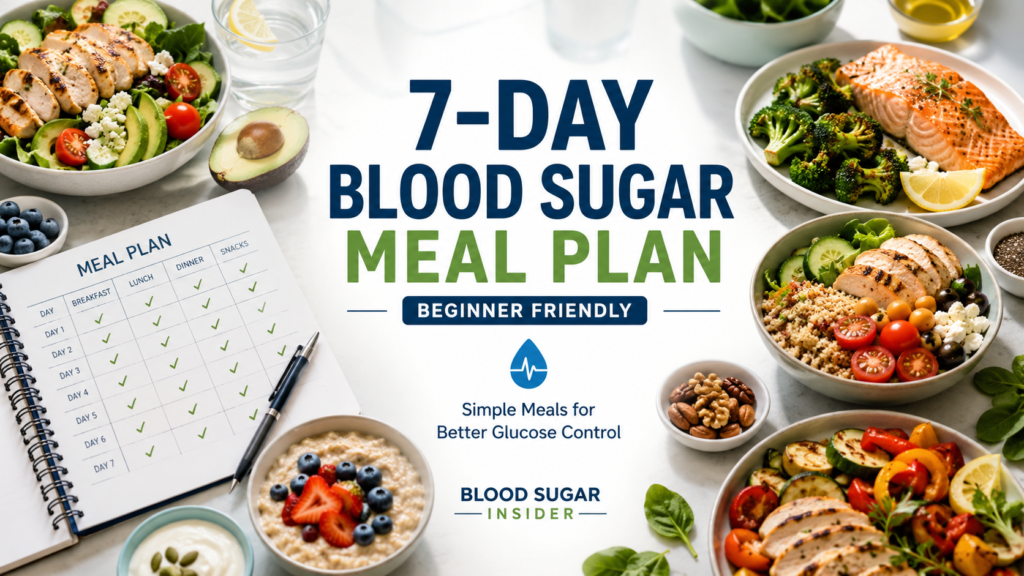
A simple 7-day blood sugar meal plan can make healthy eating feel much easier, especially if you are just starting to focus on glucose control.
The goal is not to eat perfectly. The goal is to build meals around protein, fiber, healthy fats, and slower-digesting carbohydrates so your blood sugar stays steadier throughout the day.
This beginner-friendly plan is designed to give you practical meal ideas, not strict medical instructions. If you are new to blood sugar management, you may also want to start with our Blood Sugar Management Guide for the bigger picture.
What Is a Blood Sugar-Friendly Meal Plan?
A blood sugar-friendly meal plan typically includes lean protein, high-fiber vegetables, healthy fats, and controlled portions of slower-digesting carbohydrates. This approach may help support steadier glucose levels, better energy, and improved metabolic health.
If you’re new to blood sugar management, start with our complete Blood Sugar Management Guide.
How This 7-Day Blood Sugar Meal Plan Works
This meal plan focuses on balanced meals rather than extreme restriction. For many people, blood sugar control improves when meals contain enough protein and fiber while avoiding large portions of refined carbohydrates.
If you want a deeper foundation before following the plan, read our guide on how to lower blood sugar naturally.
Each day includes:
- Breakfast
- Lunch
- Dinner
- Optional snack
You can adjust portions based on your appetite, activity level, glucose readings, and healthcare provider’s advice.
Build Every Meal Around Balance
A blood sugar-friendly plate usually contains protein, fiber-rich vegetables, healthy fats, and controlled portions of higher-fiber carbohydrates.
- Protein: eggs, chicken, fish, turkey, tofu, Greek yogurt, legumes
- Fiber: vegetables, berries, beans, lentils, chia seeds
- Healthy Fats: avocado, olive oil, nuts, seeds
- Smart Carbs: oats, quinoa, sweet potato, beans, low-glycemic grains
For more food ideas, see our guide to foods that help lower blood sugar naturally.
Want to understand how food affects glucose response? Read our Glycemic Index Guide.
Important Before You Start
Medical Note
This Meal Plan Is Educational
If you have diabetes, take insulin, use blood sugar-lowering medication, are pregnant, or have a medical condition, speak with your healthcare provider before changing your diet. Food choices can affect glucose levels and medication needs.
Day 1
Breakfast
Greek yogurt with chia seeds, blueberries, walnuts, and cinnamon.
Lunch
Grilled chicken salad with leafy greens, cucumber, tomato, avocado, olive oil, and a small serving of quinoa.
Dinner
Baked salmon with roasted broccoli, zucchini, and a small baked sweet potato.
Snack
Apple slices with peanut butter or a boiled egg with cucumber sticks.
Day 2
Breakfast
Two eggs with spinach, mushrooms, and avocado.
Breakfast can strongly influence glucose stability for the rest of the day. For more ideas, see our guide to the best breakfast for blood sugar stability.
Lunch
Turkey lettuce wraps with hummus, sliced vegetables, and a side of berries.
Dinner
Chicken stir-fry with mixed vegetables, olive oil, garlic, ginger, and cauliflower rice.
Snack
Plain Greek yogurt or a small handful of almonds.
Day 3
Breakfast
Steel-cut oats topped with chia seeds, cinnamon, and a few berries.
Lunch
Tuna salad bowl with leafy greens, boiled egg, cucumber, olive oil, and a small serving of beans.
Dinner
Lean turkey meatballs with tomato sauce, roasted vegetables, and a side salad.
Snack
Carrot sticks with hummus.
Day 4
Breakfast
Protein smoothie made with unsweetened Greek yogurt, spinach, chia seeds, berries, and unsweetened almond milk.
Lunch
Grilled chicken and vegetable bowl with avocado, greens, cucumber, and a small serving of brown rice or quinoa.
Dinner
Beef or tofu lettuce cups with vegetables, herbs, and a side of steamed greens.
Snack
Cottage cheese with cinnamon or a small handful of walnuts.
Day 5
Breakfast
Scrambled eggs with smoked salmon, spinach, and tomato.
Lunch
Lentil soup with a side salad and olive oil dressing.
Dinner
Grilled chicken or fish with asparagus, cauliflower mash, and salad.
Snack
Celery sticks with almond butter.
Day 6
Breakfast
Avocado and egg bowl with leafy greens and pumpkin seeds.
Lunch
Salmon salad with mixed greens, cucumber, olives, avocado, and olive oil.
Dinner
Turkey burger patties with roasted vegetables and a small portion of sweet potato wedges.
Snack
Boiled egg, nuts, or Greek yogurt.
Day 7
Breakfast
Omelet with vegetables, feta, spinach, and avocado.
Lunch
Chicken soup with vegetables, beans, herbs, and a side salad.
Dinner
Baked fish with green beans, roasted capsicum, zucchini, and a small serving of quinoa.
Snack
Berries with Greek yogurt or a handful of almonds.
Best Drinks During This Meal Plan
Drinks can quietly affect blood sugar, especially sweetened beverages, fruit juice, energy drinks, and flavored coffees.
Good options include:
- Water
- Sparkling water without sugar
- Unsweetened herbal tea
- Black coffee or coffee with minimal milk
- Unsweetened green tea
For a deeper list, read our guide to the best drinks for blood sugar control.
Beginner Blood Sugar Grocery List
- Protein: eggs, chicken, turkey, salmon, tuna, Greek yogurt, tofu
- Vegetables: spinach, broccoli, zucchini, cucumber, salad greens, green beans
- Smart Carbs: oats, quinoa, lentils, beans, sweet potato
- Healthy Fats: avocado, olive oil, walnuts, almonds, chia seeds
- Extras: cinnamon, herbs, lemon, garlic, unsweetened herbal tea
Before shopping, it may help to review our guide to foods that help lower blood sugar naturally.
How to Adjust the Plan
This meal plan is flexible. You can repeat meals, swap proteins, or change vegetables based on your preferences.
If you monitor glucose, compare your readings before and after meals. Understanding your numbers can help you personalize your meals over time. For reference, see our guide to normal blood sugar levels.
If a meal causes a noticeable spike, you may need to reduce the carbohydrate portion, increase protein or fiber, or take a short walk after eating.
Common Beginner Mistakes
- Eating carbohydrates alone without protein or fat
- Drinking hidden sugar in beverages
- Skipping meals and overeating later
- Eating very low fiber meals
- Assuming “healthy” foods are always blood sugar-friendly
- Not paying attention to portion size
The most effective blood sugar diet is usually the one you can follow consistently, not the strictest one.
Start Simple and Build Consistency
This 7-day blood sugar meal plan is designed to help beginners create balanced meals without feeling overwhelmed.
The most important goal is consistency. Building meals around protein, fiber, healthy fats, and smarter carbohydrate choices may help support steadier blood sugar levels, better energy, and improved metabolic health over time.
For your next step, explore our guide to foods that help lower blood sugar naturally, and if blood sugar fluctuations are affecting your daily energy, read Blood Sugar and Fatigue: Why You Feel Tired.
FAQ
What is a good meal plan for blood sugar control?
A good blood sugar meal plan usually includes protein, fiber-rich vegetables, healthy fats, and controlled portions of slower-digesting carbohydrates. Meals should be balanced rather than built around refined carbs alone.
What should I eat first thing in the morning for blood sugar?
Many people do better with a protein-rich breakfast such as eggs, Greek yogurt, cottage cheese, or a protein smoothie with fiber. These options may support steadier glucose levels compared with high-sugar breakfasts.
Can I eat carbohydrates on a blood sugar meal plan?
Yes. Many people can include carbohydrates, but portion size and quality matter. Higher-fiber choices such as oats, beans, lentils, quinoa, berries, and sweet potatoes are generally better options than refined carbs and sugary foods.
Is this meal plan suitable for diabetes?
This meal plan is educational and may not be appropriate for every person with diabetes. If you take medication or insulin, consult your healthcare provider before making major dietary changes.
What snacks are good for blood sugar control?
Good snack options often combine protein, fiber, or healthy fats. Examples include Greek yogurt, boiled eggs, nuts, hummus with vegetables, cottage cheese, or apple slices with peanut butter.
How long does it take to improve blood sugar with diet?
Some people notice changes in energy or glucose readings within days or weeks, but long-term improvement depends on consistency, activity level, sleep, stress, medication use, and overall metabolic health.
Want More Blood Sugar-Friendly Food Ideas?
Learn which foods may support steadier glucose levels and how to build meals that work for long-term blood sugar control.
See Foods That Help Lower Blood Sugar →References & Educational Sources
This article is intended for educational purposes only and discusses meal planning strategies, nutrition principles, and dietary approaches commonly associated with healthy blood sugar management.

Written by Blood Sugar Insider Editorial Team
Health researchers and writers specializing in blood sugar control, metabolic health, and evidence-based nutrition.
Our editorial team creates evidence-based content designed to help readers understand blood sugar balance, prevent spikes, and support long-term metabolic health using science-backed strategies.
Medically Reviewed for Accuracy
This content has been reviewed for accuracy and clarity by the Blood Sugar Insider Medical Review Team, using current clinical research and evidence-based guidelines.
Our process ensures that information related to blood sugar, metabolism, and health strategies aligns with current scientific understanding and evidence-based practices.
View our Editorial Policy →
Important Safety Note
This content is for educational purposes only and should not replace medical advice, diagnosis, or treatment from a qualified healthcare professional.
Always speak with your doctor before changing your diet, supplements, medication, or blood sugar management routine, especially if you have diabetes, prediabetes, or take glucose-lowering medication.