
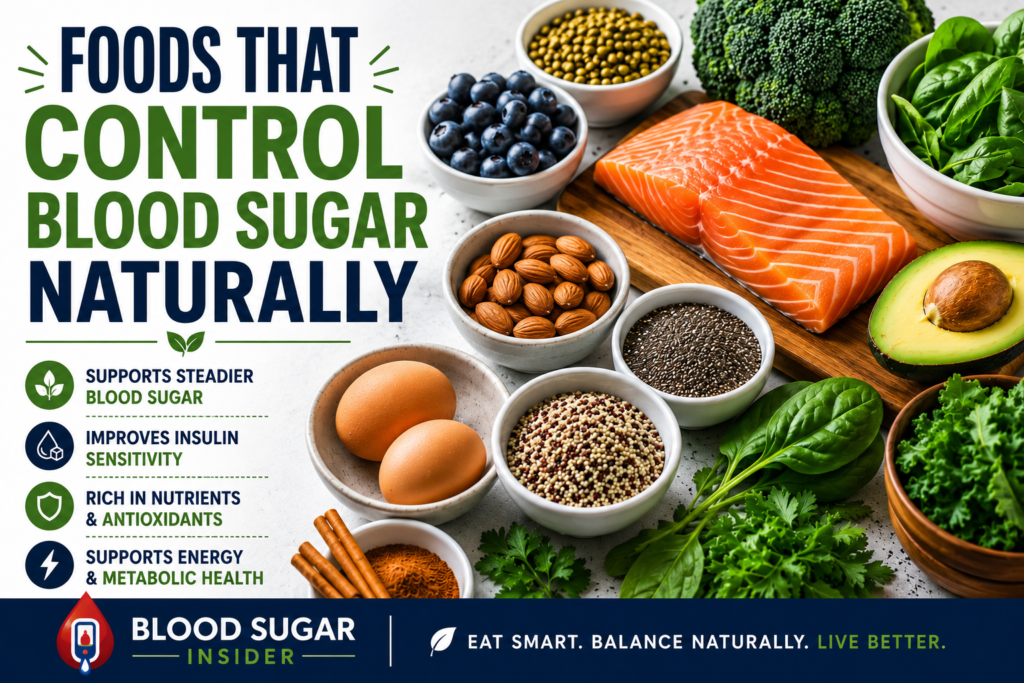
Food plays one of the biggest roles in blood sugar control.
While medication may be necessary for some people, daily food choices can significantly influence glucose levels, insulin sensitivity, and long-term metabolic health.
Certain foods may help slow digestion, reduce glucose spikes, improve insulin response, and support steadier energy throughout the day.
In this guide, we’ll look at some of the best foods that may help support healthy blood sugar levels naturally and how to build meals around them.
What Foods Help Control Blood Sugar?
The best foods for blood sugar control are usually high in protein, fiber, or healthy fats. These include eggs, leafy greens, berries, nuts, legumes, avocados, and fatty fish.
Why Food Matters for Blood Sugar
When you eat, carbohydrates break down into glucose.
Some foods digest quickly and can cause sharp spikes, while others digest more slowly and support steadier glucose levels.
If you’re still learning how glucose works, start with our guide to what blood sugar numbers mean.
The goal is not simply to avoid carbs — it’s to build balanced meals.
1. Leafy Greens
Leafy greens are among the best foods for blood sugar support.
- Spinach
- Kale
- Rocket
- Swiss chard
- Lettuce
They are low in carbohydrates and high in fiber, magnesium, and antioxidants.
2. Eggs
Eggs provide protein and healthy fats with minimal effect on blood sugar.
Protein may help reduce post-meal glucose spikes by slowing digestion.
Pairing protein with carbs is one of the simplest strategies for lowering blood sugar naturally.
3. Berries
Berries contain fiber, antioxidants, and generally have a lower glycemic load than many fruits.
- Blueberries
- Raspberries
- Strawberries
- Blackberries
They can be a smart choice for satisfying sweet cravings.
4. Nuts and Seeds
Nuts and seeds provide healthy fats, protein, and fiber.
- Almonds
- Walnuts
- Chia seeds
- Flaxseeds
- Pumpkin seeds
They may also support satiety and reduce overeating.
5. Greek Yogurt
Unsweetened Greek yogurt is rich in protein and can be a practical snack for blood sugar support.
Be cautious of flavored versions with added sugar.
Want More Blood Sugar Strategies?
Food is only one piece of the puzzle. Daily habits, movement, and meal timing matter too.
See Natural Strategies →6. Beans and Lentils
Legumes are rich in fiber and plant protein.
They digest slowly and may help support steadier blood sugar.
If you’re comparing carbs, our Glycemic Index Guide explains why this matters.
7. Avocados
Avocados provide healthy fats and fiber with very little sugar.
They can help improve meal satisfaction and may reduce glucose variability when added to meals.
8. Fatty Fish
Fish like salmon, sardines, and mackerel provide protein and omega-3 fats.
These nutrients may support inflammation control and metabolic health.
9. Cinnamon
Cinnamon is one of the most researched blood sugar-supporting spices.
Learn more in our guide to cinnamon for blood sugar.
10. Apple Cider Vinegar
Some people use apple cider vinegar before meals to help reduce blood sugar spikes.
Read our full breakdown on apple cider vinegar for blood sugar.
Foods to Limit
Foods That Can Spike Blood Sugar Faster
Sugary drinks, refined carbs, pastries, and ultra-processed foods may cause quicker glucose spikes and increased insulin demand.
Some foods may contribute to larger spikes:
- Sugary drinks
- White bread
- Pastries
- Candy
- Highly processed snacks
- Sugary breakfast cereals
If you’re noticing symptoms after eating these foods, read blood sugar spikes: causes, symptoms, and how to stop them.
How to Build Better Blood Sugar Meals
A simple blood sugar-friendly plate often includes:
- Protein
- Fiber
- Healthy fats
- Controlled smart carbs
If you need a beginner structure, use our 7-day blood sugar meal plan.
Need a Simple Blood Sugar Plan?
Use our beginner-friendly 7-day meal plan to build balanced meals and improve consistency.
View The Meal Plan →Food Choices Matter More Than Most People Think
The right foods may help reduce spikes, improve insulin sensitivity, and support long-term metabolic health. Start simple, stay consistent, and build around protein, fiber, and healthy fats.
Next step: explore our full guide on how to lower blood sugar naturally.
If you’re also exploring supplements, see our Blood Sugar Supplements Guide.
FAQ
What foods help lower blood sugar naturally?
Foods that may support healthy blood sugar include leafy greens, eggs, berries, nuts, seeds, legumes, Greek yogurt, avocados, and fatty fish. These foods are typically higher in protein, fiber, or healthy fats.
What foods should I avoid if my blood sugar is high?
Highly processed foods, sugary drinks, refined carbs, pastries, and candy may contribute to faster glucose spikes.
Do bananas raise blood sugar?
Bananas contain natural sugar and carbohydrates, but portion size and pairing with protein or fat may help reduce larger spikes.
Can eating better improve insulin resistance?
Diet can play a major role in supporting insulin sensitivity, especially when combined with exercise, sleep, and weight management.
What is the best breakfast for stable blood sugar?
A high-protein breakfast with fiber and healthy fats may help support steadier glucose levels throughout the day.
Build Better Blood Sugar Habits
Learn practical strategies, meal timing tips, movement habits, and daily routines that may support better glucose control over time.
Read The Full Blood Sugar Guide →References & Educational Sources
This article is intended for educational purposes only and discusses dietary strategies and whole-food nutrition approaches for blood sugar support.

Written by Blood Sugar Insider Editorial Team
Health researchers and writers specializing in blood sugar control, metabolic health, and evidence-based nutrition.
Our editorial team creates evidence-based content designed to help readers understand blood sugar balance, prevent spikes, and support long-term metabolic health using science-backed strategies.
Medically Reviewed for Accuracy
This content has been reviewed for accuracy and clarity by the Blood Sugar Insider Medical Review Team, using current clinical research and evidence-based guidelines.
Our process ensures that information related to blood sugar, metabolism, and health strategies aligns with current scientific understanding and evidence-based practices.
View our Editorial Policy →
Important Safety Note
This content is for educational purposes only and should not replace medical advice, diagnosis, or treatment from a qualified healthcare professional.
Always speak with your doctor before changing your diet, supplements, medication, or blood sugar management routine, especially if you have diabetes, prediabetes, or take glucose-lowering medication.