
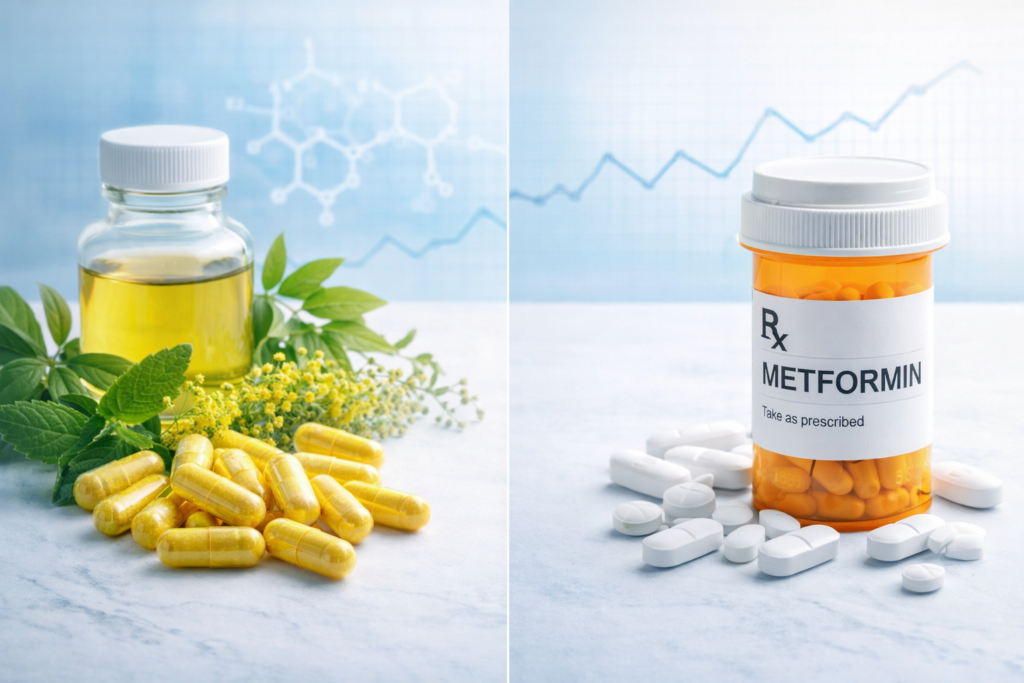
Blood sugar management is one of the most important factors in long-term metabolic health. For people struggling with elevated glucose levels or insulin resistance, two commonly discussed options are berberine and metformin.
One is a prescription medication widely used in clinical settings. The other is a natural compound derived from plants.
So how do they compare?
In this guide, you’ll learn:
- How berberine and metformin work
- Which is more effective for blood sugar control
- Key differences in safety and side effects
- When each option may be appropriate
Berberine vs Metformin: Quick Comparison
| Feature | Berberine | Metformin |
|---|---|---|
| Type | Natural plant compound | Prescription medication |
| Primary Use | Supports blood sugar and metabolism | Treats type 2 diabetes |
| Mechanism | Activates AMPK (metabolic regulator) | Reduces liver glucose production |
| Effectiveness | Moderate to strong (emerging research) | Strong (extensive clinical evidence) |
| Side Effects | Mild digestive discomfort | Nausea, diarrhea (common) |
| Accessibility | Over-the-counter supplement | Prescription required |
| Long-Term Use | Often used as part of lifestyle strategy | Widely used long-term in clinical care |
| Additional Benefits | May support cholesterol & inflammation | Primarily focused on glucose control |
Quick takeaway:
Metformin has stronger clinical evidence, while berberine offers a natural alternative with promising results.
Which Is Better: Berberine or Metformin?
Quick Answer
Metformin is generally more reliable for lowering blood sugar due to strong clinical evidence and medical supervision. Berberine can be an effective natural option, especially for early-stage blood sugar issues or those focusing on lifestyle-based management.
Metformin is better if:
• You have diagnosed type 2 diabetes
• You need clinically proven results
• Your doctor has prescribed medication
• Your blood sugar levels are significantly elevated
Berberine may be better if:
• You prefer a natural approach
• You are managing early insulin resistance
• You want metabolic and cholesterol support
• You are focusing on prevention
In many cases:
Both approaches can complement a broader strategy that includes:
• Diet
• Exercise
• Weight management
• Sleep and stress control
⚠️ IMPORTANT NOTE
Do not position one as a “replacement” for the other.
👉 Important:
Berberine should not replace prescribed medication without medical guidance.
Why This Comparison Matters
Both berberine and metformin target similar pathways involved in glucose regulation.
They can:
- Improve insulin sensitivity
- Reduce glucose production in the liver
- Support overall metabolic balance
However, they differ significantly in:
- Origin (natural vs pharmaceutical)
- Regulation
- Side effect profiles
👉 For a full overview of natural compounds, see our blood sugar supplements guide:
https://bloodsugarinsider.com/blood-sugar/supplements/
What Is Metformin?
Metformin is a prescription medication commonly used to manage type 2 diabetes.
How It Works
- Reduces glucose production in the liver
- Improves insulin sensitivity
- Enhances glucose uptake by cells
Key Benefits
- Strong clinical evidence
- Widely prescribed worldwide
- Effective for lowering blood sugar levels
What Is Berberine?
Berberine is a plant compound found in herbs such as barberry and goldenseal.
How It Works
- Activates AMPK (a key metabolic regulator)
- Improves insulin sensitivity
- Reduces glucose production
Key Benefits
- Natural compound
- Supports metabolic health
- May also improve cholesterol and inflammation
⚖️ Berberine vs Metformin: Key Differences
Effectiveness
Research suggests that berberine may have similar glucose-lowering effects to metformin in some studies.
However:
- Metformin has stronger long-term clinical evidence
- Berberine shows promising but still emerging research
Safety and Side Effects
Metformin
- Common: nausea, diarrhea
- Rare: lactic acidosis (serious condition)
Berberine
- Common: digestive discomfort
- Generally well tolerated when used appropriately
Accessibility
- Metformin → prescription required
- Berberine → available as a supplement
Long-Term Use
- Metformin → long-term clinical use
- Berberine → often used as part of broader lifestyle strategy
Looking for Natural Blood Sugar Support?
Explore the most effective supplements for stabilizing glucose levels.
See the Supplements GuideWhich One Should You Choose?
The right choice depends on your situation.
Berberine may be suitable if:
- You prefer a natural approach
- You are focusing on prevention
- You want additional metabolic benefits
Metformin may be appropriate if:
- You have diagnosed type 2 diabetes
- Your doctor recommends it
- You need clinically proven intervention
Can You Take Berberine and Metformin Together?
In some cases, they may be used together—but this should always be done under medical supervision.
Combining both may increase effects on blood sugar, which requires monitoring.
Important Considerations
- Supplements are not replacements for medical treatment
- Lifestyle factors remain the foundation of blood sugar control
- Always consult a healthcare professional when needed
👉 Learn how to manage glucose naturally in our blood sugar control guide:
https://bloodsugarinsider.com/blood-sugar/control/
❓ Frequently Asked Questions
Is berberine as effective as metformin?
Some studies suggest similar effects, but metformin has stronger clinical evidence.
Which has fewer side effects?
Berberine is generally well tolerated, but both can cause digestive issues.
Can berberine replace metformin?
Not without medical supervision. Metformin is a prescribed treatment.
How long does berberine take to work?
Some effects may be seen within weeks, with consistent use.
Is berberine safe long term?
It appears safe for many people, but long-term research is still developing.
🔗 Related Articles
Take Control of Your Blood Sugar Naturally
Discover proven strategies to stabilize glucose and improve metabolic health.
Start With the Complete Guide
Written by Blood Sugar Insider Editorial Team
Health researchers and writers specializing in blood sugar control, metabolic health, and evidence-based nutrition.
Our editorial team creates evidence-based content designed to help readers understand blood sugar balance, prevent spikes, and support long-term metabolic health using science-backed strategies.
Medically Reviewed for Accuracy
This content has been reviewed for accuracy and clarity by the Blood Sugar Insider Medical Review Team, using current clinical research and evidence-based guidelines.
Our process ensures that information related to blood sugar, metabolism, and health strategies aligns with current scientific understanding and evidence-based practices.
View our Editorial Policy →