
🔗 Part of the Blood Sugar Hub
Explore the full system here:
👉 Blood Sugar Health Hub: Control, Diet, Symptoms & Natural Solutions
🧬 Introduction
Blood sugar imbalance is not just about eating too much sugar.
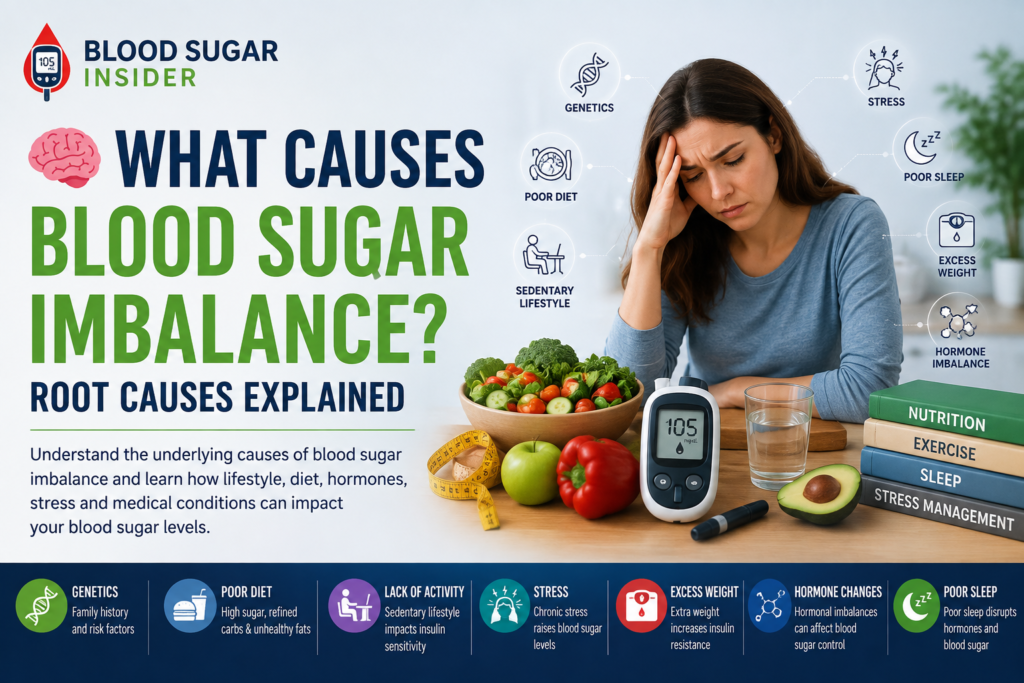
In reality, glucose instability is driven by a network of underlying biological processes—including insulin function, stress hormones, inflammation, liver activity, and lifestyle patterns.
Many people focus only on diet, but the truth is:
👉 Blood sugar is controlled by your entire metabolic system.
This guide breaks down the true root causes of blood sugar imbalance, helping you understand what’s really happening inside your body—and how to fix it.
Want to Understand the Full Picture First?
Start Here →🔍 The Core Drivers of Blood Sugar Imbalance
Blood sugar becomes unstable when the body loses its ability to properly regulate glucose entering and leaving the bloodstream.
This is typically driven by five key mechanisms:
- Insulin resistance
- Poor dietary patterns
- Chronic stress and cortisol
- Sleep disruption
- Inflammation
Let’s break each one down.
⚙️ 1. Insulin Resistance (The Primary Root Cause)
What is insulin resistance?
Insulin resistance is the condition where your body’s cells no longer respond effectively to insulin.
Insulin is the hormone that moves glucose from your bloodstream into your cells.
When your body becomes resistant to insulin:
👉 Glucose stays in the bloodstream longer
👉 Blood sugar rises
👉 The pancreas produces more insulin
Over time, this leads to:
- Chronic high blood sugar
- Fat storage (especially belly fat)
- Increased risk of type 2 diabetes
What causes insulin resistance?
- High sugar and refined carb intake
- Sedentary lifestyle
- Chronic inflammation
- Hormonal imbalance
🥗 2. Poor Diet & Frequent Glucose Spikes
The real problem is not sugar alone
Blood sugar spikes happen when:
- Meals are high in refined carbohydrates
- Fiber and protein are low
- Eating patterns are inconsistent
Common triggers:
- Sugary drinks
- Processed foods
- White bread, pastries, cereals
These foods cause:
👉 Rapid glucose spikes
👉 Insulin surges
👉 Energy crashes
Over time, this contributes to insulin resistance.
🔗 RELATED READING
- Blood Sugar Diet: Best Foods Worst Foods & Smart Eating Strategies
- How to Lower Blood Sugar Naturally: Complete Guide to Fast & Long-Term Control
😰 3. Stress & Cortisol (The Hidden Blood Sugar Trigger)
Stress is one of the most overlooked causes of blood sugar imbalance.
When you’re stressed:
👉 Your body releases cortisol
👉 Cortisol signals the liver to release glucose
👉 Blood sugar rises—even without food
Chronic stress leads to:
- Constant elevated glucose
- Increased insulin resistance
- Fat storage (especially abdominal)
🔗 DEEP DIVE
Stress and Blood Sugar: The Cortisol Connection
😴 4. Poor Sleep & Circadian Disruption
Sleep directly affects insulin sensitivity.
Even one night of poor sleep can:
- Reduce insulin sensitivity
- Increase hunger hormones
- Raise fasting blood sugar
Long-term effects of poor sleep:
- Increased risk of diabetes
- Hormonal imbalance
- Chronic fatigue and cravings
🔗 LEARN MORE
Sleep and Blood Sugar: Why Poor Sleep Raises Glucose
🔥 5. Chronic Inflammation
Inflammation interferes with how insulin works.
When inflammation is present:
👉 Cells respond less effectively to insulin
👉 Blood sugar remains elevated
Common sources of inflammation:
- Processed foods
- Poor gut health
- Chronic stress
- Excess body fat
🔗 RELATED
Inflammation and Blood Sugar Imbalance
🧠 6. Gut Health & Microbiome Imbalance
Your gut bacteria play a major role in blood sugar regulation.
An unhealthy microbiome can:
- Increase inflammation
- Disrupt insulin signaling
- Affect how nutrients are absorbed
🔗 READ MORE
The Gut–Blood Sugar Connection: What You Need to Know
🏥 7. Liver Function & Glucose Production
The liver stores and releases glucose.
When liver function is impaired:
👉 It may release too much glucose
👉 Blood sugar remains elevated—even fasting
This is a key reason for:
- High morning blood sugar
- Insulin resistance progression
🔗 DEEP DIVE
How Liver Function Affects Blood Sugar Levels
⚖️ How These Causes Work Together
Blood sugar imbalance is rarely caused by one factor.
Instead, it’s a combination of:
- Diet + stress
- Sleep + inflammation
- Insulin resistance + liver function
👉 This is why quick fixes often fail.
You need a system-wide approach.
Now That You Understand the Causes…
This article covers one part of the puzzle. For a full step-by-step system to stabilise blood sugar, improve energy, and prevent spikes, follow the complete guide.
View the Complete Guide →🚀 How to Fix Blood Sugar at the Root Level
To stabilize blood sugar effectively, focus on:
1. Improve insulin sensitivity
- Regular movement
- Strength training
- Balanced meals
2. Control glucose spikes
- Eat protein + fiber first
- Avoid refined carbs
3. Manage stress
- Breathing techniques
- Walking
- Recovery time
4. Optimize sleep
- Consistent sleep schedule
- Reduce screen exposure at night
5. Support with supplements (if needed)
❓ Frequently Asked Questions
What causes blood sugar imbalance?
Blood sugar imbalance is caused by insulin resistance, poor diet, stress, lack of sleep, inflammation, and metabolic dysfunction.
Understanding these root causes is the first step—but improving blood sugar requires consistent daily action.
Explore proven natural strategies for blood sugar management to stabilise levels and support long-term metabolic health.
Can stress raise blood sugar?
Yes. Stress hormones like cortisol increase glucose release into the bloodstream.
Does poor sleep affect blood sugar?
Yes. Poor sleep reduces insulin sensitivity and increases glucose levels.
Can inflammation affect blood sugar?
Yes. Chronic inflammation interferes with insulin signaling.
Reducing inflammation through daily habits can significantly improve blood sugar control.
These natural strategies support both insulin function and metabolic stability.
Can diet alone fix blood sugar?
Diet plays a major role, but long-term control requires a full lifestyle approach.
🔗 Related Articles
- How to Lower Blood Sugar Naturally: Complete Guide to Fast & Long-Term Control
- Blood Sugar Diet: Best Foods Worst Foods & Smart Eating Strategies
- Best Blood Sugar Supplements: Natural Compounds That Support Glucose Control
- Blood Sugar Symptoms: Warning Signs You Shouldn’t Ignore
Take Control of Your Blood Sugar System
Blood sugar imbalance is not caused by one thing—it’s a system issue involving insulin, stress, sleep, inflammation, and diet.
Start fixing the root causes and take control of your energy, metabolism, and long-term health.
Or begin with simple, proven natural strategies you can apply daily.
Explore the Blood Sugar Hub
Written by Blood Sugar Insider Editorial Team
Health researchers and writers specializing in blood sugar control, metabolic health, and evidence-based nutrition.
Our editorial team creates evidence-based content designed to help readers understand blood sugar balance, prevent spikes, and support long-term metabolic health using science-backed strategies.
Medically Reviewed for Accuracy
This content has been reviewed for accuracy and clarity by the Blood Sugar Insider Medical Review Team, using current clinical research and evidence-based guidelines.
Our process ensures that information related to blood sugar, metabolism, and health strategies aligns with current scientific understanding and evidence-based practices.
View our Editorial Policy →