
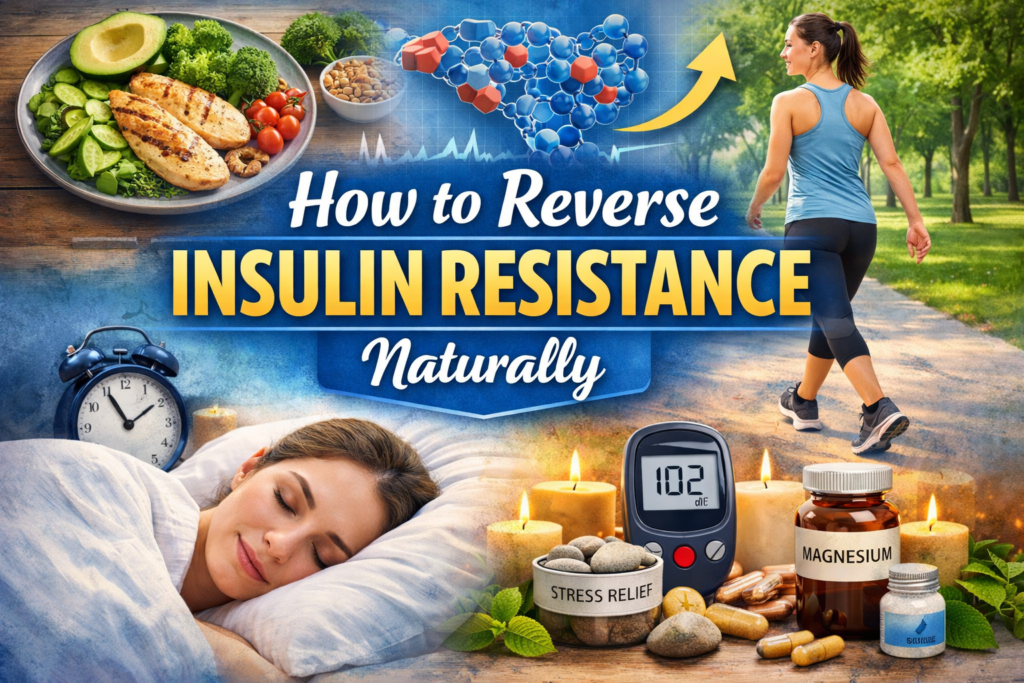
Learning how to reverse insulin resistance naturally starts with understanding one key truth: insulin resistance develops over time—and it improves the same way.
Through consistent daily habits, you can reduce blood sugar spikes, improve how your body responds to insulin, and gradually restore metabolic balance.
If you’re experiencing fatigue after meals, sugar cravings, stubborn belly fat, or energy crashes, these are often early warning signs.
👉 Learn more here: Signs of Insulin Resistance (Early & Advanced Symptoms)
If you’re new to this topic, start with the foundation:
What Is Insulin Resistance (Quick Recap)
Insulin resistance occurs when your cells stop responding efficiently to insulin.
This leads to:
- Glucose staying in the bloodstream longer
- Higher blood sugar levels
- Increased insulin production
Over time, this can progress into more serious metabolic issues.
To understand the full mechanism, see:
👉 What Causes Insulin Resistance? (Full Breakdown)
The Real Goal: Reduce Insulin Demand
Reversing insulin resistance is not about a quick fix.
It’s about reducing the demand placed on your body to constantly produce insulin.
This happens when you:
- Lower blood sugar spikes
- Improve glucose usage
- Support your metabolism consistently
1. Improve Your Diet (Biggest Impact)
Your diet is the most powerful lever for reversing insulin resistance.
What you eat directly determines how much glucose enters your bloodstream—and how much insulin your body needs to respond.
Focus on:
- Whole, unprocessed foods
- Lean proteins
- Healthy fats (olive oil, nuts, avocado)
- High-fiber vegetables
- Low-glycemic carbohydrates
Reduce or avoid:
- Sugary drinks
- Refined carbohydrates
- Ultra-processed foods
- Frequent snacking
For a full breakdown of what to eat:
👉 Blood Sugar Diet: Best Foods, Worst Foods & Smart Eating Strategies
If you want structure, use:
👉 7-Day Blood Sugar Meal Plan (Beginner Friendly)
And for insulin-specific nutrition:
👉 Best Diet for Insulin Resistance (Foods That Reverse It)
2. Move Your Body Daily
Physical activity is one of the fastest ways to improve insulin sensitivity.
When you move, your muscles absorb glucose directly—reducing the need for insulin.
One of the most effective strategies is walking after meals.
Even 10–15 minutes of light movement can significantly reduce blood sugar spikes.
You can also learn more about exercise and glucose control here:
👉 Does Exercise Lower Blood Sugar? The Science Explained
3. Lose Excess Body Fat (If Needed)
Excess fat—especially around the abdomen—plays a major role in insulin resistance.
Even modest weight loss can:
- Improve insulin sensitivity
- Lower fasting glucose
- Reduce inflammation
This doesn’t require extreme dieting—just consistency with the strategies in this guide.
4. Optimize Meal Timing
When you eat matters just as much as what you eat.
Poor meal timing can:
- Increase insulin demand
- Lead to higher blood sugar spikes
- Reduce metabolic efficiency
Key principles:
- Avoid constant grazing
- Allow gaps between meals
- Limit late-night eating
- Maintain consistency
👉 Learn more: Best Time to Eat for Blood Sugar Stability
5. Improve Sleep Quality
Sleep is one of the most overlooked drivers of insulin resistance.
Poor sleep can:
- Increase blood sugar
- Reduce insulin sensitivity
- Increase cravings
Aim for:
- 7–9 hours per night
- Consistent sleep schedule
- Reduced screen exposure before bed
Also see how sleep affects blood sugar:
👉 Sleep and Blood Sugar: Why Poor Sleep Raises Glucose
6. Manage Stress (Critical but Overlooked)
Chronic stress raises cortisol levels, which directly impacts blood sugar.
Over time, this can worsen insulin resistance.
Simple strategies:
- Daily walking
- Relaxation routines
- Breathing exercises
- Reducing overstimulation
👉 Learn more about stress and blood sugar: Stress and Blood Sugar: The Cortisol Connection
7. Use Supplements Strategically (Optional)
Supplements can support insulin sensitivity—but they are not a replacement for lifestyle changes.
Common options include:
- Magnesium
- Berberine
- Chromium
- Alpha-lipoic acid
👉 See full breakdown: Best Supplements for Insulin Resistance: What Helps Most?
Common Mistakes That Slow Progress
Many people unknowingly delay results.
Watch out for:
- Constant snacking
- Drinking calories (juice, soda)
- Sedentary lifestyle
- Poor sleep
- Relying only on supplements
How Long Does It Take to Reverse Insulin Resistance?
This depends on your current health and consistency.
Typical timeline:
- Weeks → improved energy and fewer cravings
- 1–3 months → better blood sugar control
- 3–6+ months → improved insulin sensitivity
Consistency matters more than speed.
Key Takeaways
- Insulin resistance can often be improved naturally
- Diet and movement have the biggest impact
- Meal timing and sleep play major roles
- Small daily habits create long-term results
Related Articles
- What is Insulin Resistance
- Signs of Insulin Resistance
- What Causes Insulin Resistance?
- Blood Sugar Diet Guide
- How to Lower Blood Sugar Naturally
FAQs
Can insulin resistance be reversed naturally?
Yes, insulin resistance can often be improved naturally through consistent changes in diet, physical activity, sleep, stress management, and weight reduction when needed.
What is the fastest natural way to improve insulin resistance?
The fastest natural strategies usually include reducing refined carbohydrates and sugary drinks, walking after meals, improving sleep, and following a consistent meal pattern that reduces blood sugar spikes.
How long does it take to reverse insulin resistance?
The timeline varies depending on metabolic health, body composition, diet, and consistency. Some people notice improvements in energy and cravings within weeks, while blood sugar markers may improve over several months.
What foods help reverse insulin resistance?
Foods that help support insulin sensitivity include non-starchy vegetables, lean proteins, healthy fats, legumes, nuts, seeds, and high-fiber, minimally processed carbohydrates.
Does walking after meals help insulin resistance?
Yes, walking after meals can help lower post-meal blood sugar by encouraging muscles to absorb glucose more effectively, which may improve insulin sensitivity over time.
Does sleep affect insulin resistance?
Yes, poor sleep can worsen insulin resistance by increasing stress hormones, disrupting appetite regulation, and reducing the body’s ability to manage blood sugar efficiently.
Can stress make insulin resistance worse?
Yes, chronic stress can increase cortisol levels, which may raise blood sugar and contribute to worsening insulin resistance over time.
Do supplements help reverse insulin resistance?
Some supplements may support insulin sensitivity, but they work best when combined with lifestyle changes such as better nutrition, movement, sleep, and stress control.
Start Here
If you want a structured system to improve your blood sugar, start with the guided entry page below.
Or, if you prefer the full step-by-step framework, go straight to the Blood Sugar Management Guide.
Build a stronger foundation with the beginner path, or explore the full framework for deeper blood sugar support.
Written by Blood Sugar Insider Editorial Team
Health researchers and writers specializing in blood sugar control, metabolic health, and evidence-based nutrition.
Our editorial team creates evidence-based content designed to help readers understand blood sugar balance, prevent spikes, and support long-term metabolic health using science-backed strategies.
Medically Reviewed for Accuracy
This content has been reviewed for accuracy and clarity by the Blood Sugar Insider Medical Review Team, using current clinical research and evidence-based guidelines.
Our process ensures that information related to blood sugar, metabolism, and health strategies aligns with current scientific understanding and evidence-based practices.
View our Editorial Policy →