
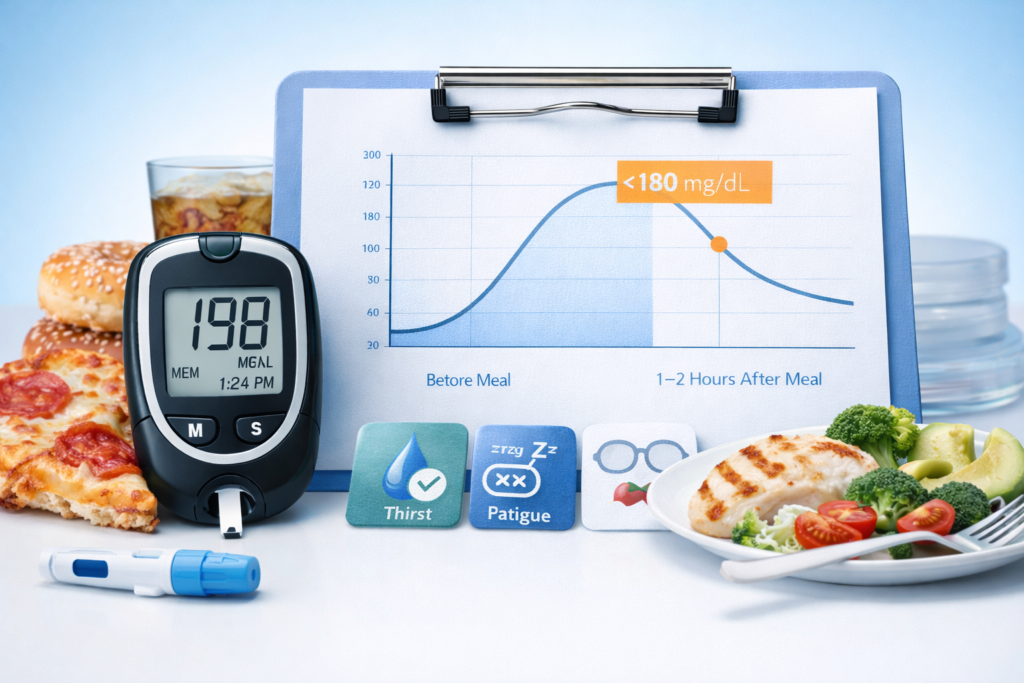
If you are dealing with blood sugar spikes, the first thing to understand is that blood sugar naturally rises after eating, but repeated sharp increases or readings that stay too high can be a sign that your body is struggling to regulate glucose efficiently. This page sits within the broader Blood Sugar Control section because spikes are often one of the earliest signs that your daily blood sugar management needs attention.
For many people, spikes do not happen randomly. They are often linked to meal composition, inactivity, poor sleep, stress, or deeper metabolic issues such as insulin resistance. They can also overlap with symptoms like dizziness, fatigue, thirst, and frequent urination, which is why this page works best as a bridge between blood sugar causes, symptoms, and practical action.
What Are Blood Sugar Spikes?
Blood sugar spikes are periods when glucose rises higher than your body handles comfortably, often after meals or during stress, illness, or poor sleep. For people with diabetes, this usually falls under hyperglycemia, or high blood glucose. NIDDK says that for most people with diabetes, blood glucose is considered too high when it is above 180 mg/dL.
That does not mean every reading over one specific number equals an emergency. The bigger issue is the pattern: how often it happens, how high it goes, how long it stays elevated, and whether symptoms come with it. CGM guidance also emphasizes pattern quality and time in range, not just one isolated number.
What Causes Blood Sugar Spikes?
The most common triggers are:
- meals or snacks with more carbohydrate than usual
- sugar-sweetened drinks
- inactivity
- stress
- illness or infection
- sleep loss
- medication issues, including not enough insulin in people who need it
- underlying insulin resistance
CDC’s guidance on high blood sugar specifically lists being sick, being stressed, eating more than usual, and not taking enough insulin as common causes of hyperglycemia. CDC also notes that even one night of too little sleep can make the body use insulin less well, and ADA notes that food, physical activity, and medications all influence glucose levels.
For many readers, the deeper driver behind repeated spikes is insulin resistance.
Symptoms of Blood Sugar Spikes
Common symptoms of rising or high blood sugar include:
- increased thirst
- frequent urination
- fatigue
- blurry vision
- increased hunger
- sometimes headache or feeling generally unwell
NIDDK and ADA both list thirst, urination, fatigue, hunger, and blurred vision among the common symptoms of diabetes or hyperglycemia. Some people, however, have very mild symptoms or none at all, especially early on.
Related symptom pages:
- Why You Feel Shaky, Dizzy, or Lightheaded
- Frequent Urination and Blood Sugar: What It Means
- Blood Sugar and Fatigue: Why You Feel Tired
What Counts as “Too High” After a Meal?
For most nonpregnant adults with diabetes, ADA suggests aiming for less than 180 mg/dL at 1 to 2 hours after the beginning of a meal. That is a common management target, not the same thing as the formal lab cutoffs used to diagnose diabetes.
That distinction matters. A daily post-meal reading and a 2-hour oral glucose tolerance test are not the same thing. CDC’s diagnostic page says that on the 2-hour glucose tolerance test, 140 mg/dL or below is normal, 140–199 mg/dL is prediabetes, and 200 mg/dL or above is diabetes range.
Why Spikes Matter Even If Fasting Glucose Looks Okay
A fasting glucose test shows one moment after an overnight fast. A1C shows an average over about 2 to 3 months. Neither one fully shows what happened after breakfast, lunch, or dinner. ADA notes that estimated average glucose is still just an average, and CGM guidance focuses on how much time glucose spends inside or outside the target range.
That means someone can have:
- a borderline or even normal fasting result
- a middling A1C
- and still be having repeated large after-meal rises
This is why Post-Meal Blood Sugar Explained and What Blood Sugar Numbers Mean are useful companion pages.
How to Stop Blood Sugar Spikes
The most practical ways to reduce spikes are to lower the glucose load of the meal and improve how your body handles it.
1. Reduce fast-digesting carbs and sugary drinks
CDC notes that too many carbohydrates, especially sugary and starchy foods, can spike blood sugar. ADA also highlights food as a major driver of highs and lows.
2. Add protein, fiber, and less processed foods
ADA’s food-monitoring guidance emphasizes learning how food affects your blood glucose and using that to make better food choices. Meals built around protein, fiber, and less refined carbohydrate are often easier to manage than high-sugar, low-fiber meals.
3. Walk after meals
ADA notes that moving after a meal can help keep blood glucose levels more stable and manageable.
4. Improve sleep and stress control
CDC says even one night of poor sleep can make your body use insulin less well, and stress is also listed as a cause of higher blood sugar.
5. Review medication issues if you use them
CDC and ADA both note that not enough insulin or medication-related issues can contribute to highs.
6. Work on insulin sensitivity
If spikes are frequent, the deeper issue may be reduced insulin effectiveness. That is where How to Improve Insulin Sensitivity Naturally becomes an important next step.
Best Foods and Drinks Strategy for Fewer Spikes
The safest high-level rule is simple: build meals around foods that digest more slowly and avoid large hits of liquid sugar or heavily refined carbohydrate. CDC lists sugar-sweetened beverages as major sources of added sugar in the diet, and ADA notes that understanding how foods affect blood glucose helps you make better decisions.
Useful next pages:
- Blood Sugar Diet: Best Foods, Worst Foods & Smart Eating Strategies
- Foods That Help Lower Blood Sugar Naturally
- Best Drinks for Blood Sugar Control (And What to Avoid)
When Blood Sugar Spikes May Be More Serious
Occasional highs happen. More urgent concern starts when blood sugar stays high, symptoms worsen, or ketones are present in people at risk for diabetic ketoacidosis.
CDC says that if you are sick and your blood sugar is 240 mg/dL or above, you should use an over-the-counter ketone test kit if advised and contact your doctor if ketones are high. CDC also describes DKA as a medical emergency, with symptoms such as extreme thirst, urinating a lot, nausea, vomiting, stomach pain, fruity-smelling breath, fast deep breathing, and severe fatigue.
When to Speak With a Doctor
You should follow up with a healthcare professional if:
- your glucose is often above target after meals
- you have repeated symptoms like thirst, urination, fatigue, or blurry vision
- fasting glucose or A1C is also rising
- you are seeing readings of 240 mg/dL or above, especially with illness
- you have nausea, vomiting, abdominal pain, fruity breath, or deep rapid breathing
Conclusion
Blood sugar spikes usually happen when glucose rises faster or higher than your body can comfortably manage, often after meals, during stress, with illness, or when insulin action is not adequate. The good news is that spikes often improve with smarter meal structure, movement after eating, better sleep, stress control, and better insulin sensitivity. The important part is not chasing one number in isolation, but learning the pattern behind it and acting early.
Related Articles
FAQ
What are blood sugar spikes?
Blood sugar spikes are periods when blood glucose rises higher than your body handles well, often after meals, during stress, with illness, or when insulin action is not adequate.
What causes blood sugar spikes?
Common causes include eating more carbohydrate than usual, sugary drinks, stress, illness, inactivity, poor sleep, medication issues, and insulin resistance.
What symptoms can blood sugar spikes cause?
Common symptoms include thirst, frequent urination, fatigue, blurred vision, and sometimes increased hunger.
What is considered too high after a meal?
For most nonpregnant adults with diabetes, ADA suggests a common post-meal target of less than 180 mg/dL at 1–2 hours after the start of a meal.
Can poor sleep raise blood sugar?
Yes. CDC says even one night of too little sleep can make your body use insulin less well.
Can stress cause blood sugar spikes?
Yes. CDC and ADA both list stress as a cause of higher blood glucose.
Does walking after meals help?
ADA notes that moving after a meal can help keep blood glucose levels stable and manageable.
When should high blood sugar be more urgent?
CDC says if you are sick and blood sugar is 240 mg/dL or above, you should check ketones if advised. High ketones can be an early sign of DKA, which is a medical emergency.
Start Reducing Blood Sugar Spikes Strategically
Spikes usually improve when you combine better meal structure, movement, and stronger insulin sensitivity. Start with the control pillar, then go deeper into food choices and root causes.
Written by Blood Sugar Insider Editorial Team
Health researchers and writers specializing in blood sugar control, metabolic health, and evidence-based nutrition.
Our editorial team creates evidence-based content designed to help readers understand blood sugar balance, prevent spikes, and support long-term metabolic health using science-backed strategies.
Medically Reviewed for Accuracy
This content has been reviewed for accuracy and clarity by the Blood Sugar Insider Medical Review Team, using current clinical research and evidence-based guidelines.
Our process ensures that information related to blood sugar, metabolism, and health strategies aligns with current scientific understanding and evidence-based practices.
View our Editorial Policy →