
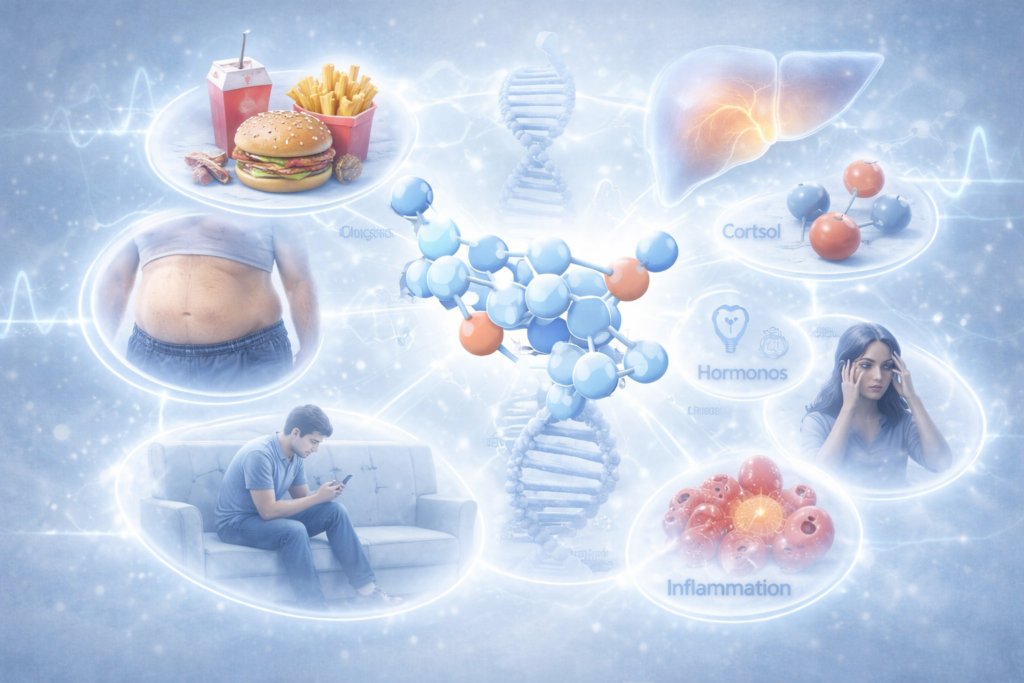
Understanding what causes insulin resistance is the key to fixing blood sugar problems at the root.
Insulin resistance does not happen overnight. It develops gradually as multiple lifestyle, dietary, and metabolic factors begin to interfere with how your body processes glucose.
If left unaddressed, it can lead to chronic high blood sugar, weight gain, fatigue, and eventually type 2 diabetes.
If you’re new to this topic, start here: What is Insulin Resistance
What Is Happening in Insulin Resistance?
Insulin is the hormone that helps move glucose from your bloodstream into your cells.
When insulin resistance develops:
- Cells stop responding properly
- Glucose remains in the bloodstream
- The pancreas produces more insulin
Over time, this creates a cycle of:
- High blood sugar
- High insulin levels
- Increased fat storage
The Main Causes of Insulin Resistance
There is no single cause. Instead, insulin resistance develops from a combination of factors.
1. High Sugar and Refined Carbohydrate Intake
One of the most common causes is a diet high in:
- Sugary foods
- Processed carbohydrates
- Frequent snacking
These foods cause repeated blood sugar spikes, forcing your body to release more insulin.
Over time, your cells become less responsive.
Learn how diet impacts blood sugar here: Blood Sugar Diet: Best Foods, Worst Foods & Smart Eating Strategies
2. Sedentary Lifestyle
Lack of physical activity reduces your body’s ability to use glucose effectively.
Muscles play a major role in glucose uptake. When you’re inactive:
- Glucose is not used efficiently
- Insulin demand increases
- Sensitivity decreases
See how movement impacts blood sugar here: Does Exercise Lower Blood Sugar? The Science Explained
3. Chronic Inflammation
Inflammation disrupts insulin signaling pathways.
This can be triggered by:
- Poor diet
- Stress
- Lack of sleep
- Excess body fat
Learn more about inflammation and blood sugar: Inflammation and Blood Sugar Imbalance
4. Excess Body Fat (Especially Belly Fat)
Abdominal fat is metabolically active and contributes to insulin resistance.
It releases inflammatory compounds that interfere with insulin function.
This is why belly fat is strongly linked to blood sugar problems.
5. Hormonal Imbalances
Hormones regulate metabolism and insulin sensitivity.
Imbalances in:
- Cortisol (stress hormone)
- Thyroid hormones
- Sex hormones
…can all affect how your body handles glucose.
See the stress connection here: Stress and Blood Sugar: The Cortisol Connection
6. Poor Sleep
Sleep plays a critical role in metabolic regulation.
Lack of sleep can:
- Increase insulin resistance
- Raise blood sugar levels
- Disrupt hunger hormones
Learn more here: Sleep and Blood Sugar: Why Poor Sleep Raises Glucose
7. Liver Dysfunction
The liver helps regulate blood sugar by storing and releasing glucose.
When liver function is impaired:
- Blood sugar becomes unstable
- Glucose regulation is disrupted
See full breakdown: How Liver Function Affects Blood Sugar Levels
8. Gut Health Imbalance
Your gut microbiome influences:
- Inflammation
- Metabolism
- Insulin sensitivity
Poor gut health can contribute to insulin resistance over time.
Learn more here: The Gut–Blood Sugar Connection: What You Need to Know
How These Causes Work Together
Most people do not develop insulin resistance from just one factor.
Instead, it’s usually a combination of:
- Poor diet
- Low activity
- Chronic stress
- Poor sleep
- Inflammation
These factors compound over time, gradually reducing insulin sensitivity.
Early Warning Signs to Watch For
Many people experience symptoms long before diagnosis.
Common signs include:
- Fatigue after eating
- Sugar cravings
- Belly fat
- Brain fog
See the full list here: Signs of Insulin Resistance (Early & Advanced Symptoms)
Can These Causes Be Reversed?
Yes—many of the root causes of insulin resistance can be improved.
This includes:
- Changing diet
- Increasing activity
- Improving sleep
- Reducing stress
Follow the full plan here:
https://bloodsugarinsider.com/blood-sugar/what-is-insulin-resistance/reverse/
Key Takeaways
- Insulin resistance develops from multiple factors
- Diet, lifestyle, and inflammation play major roles
- Hormones, sleep, and liver function also contribute
- Addressing root causes is key to improving blood sugar
Related Articles
- What is Insulin Resistance
- Signs of Insulin Resistance
- How to Reverse Insulin Resistance Naturally
- Blood Sugar Diet Guide
❓ FAQ
What is the main cause of insulin resistance?
The main cause is a combination of high sugar intake, lack of physical activity, and chronic inflammation.
Can diet cause insulin resistance?
Yes. Diets high in sugar and refined carbohydrates are one of the leading causes.
Does lack of exercise cause insulin resistance?
Yes. Physical inactivity reduces glucose uptake and worsens insulin sensitivity.
Can stress cause insulin resistance?
Yes. Chronic stress increases cortisol, which can interfere with insulin function.
Is insulin resistance reversible?
In many cases, yes. Lifestyle changes can significantly improve insulin sensitivity.
How does sleep affect insulin resistance?
Poor sleep disrupts hormones and increases the risk of insulin resistance.
👉 “Want to see how these causes show up in your body?”
Now That You Understand the Causes… Here’s What to Do Next
Insulin resistance doesn’t come from just one issue—it builds over time through diet, lifestyle, stress, and metabolic factors. The key is addressing these root causes with a structured, sustainable approach.
Start with a simple step-by-step system to stabilize blood sugar, improve insulin sensitivity, and reverse the underlying drivers.

Written by Blood Sugar Insider Editorial Team
Health researchers and writers specializing in blood sugar control, metabolic health, and evidence-based nutrition.
Our editorial team creates evidence-based content designed to help readers understand blood sugar balance, prevent spikes, and support long-term metabolic health using science-backed strategies.
Medically Reviewed for Accuracy
This content has been reviewed for accuracy and clarity by the Blood Sugar Insider Medical Review Team, using current clinical research and evidence-based guidelines.
Our process ensures that information related to blood sugar, metabolism, and health strategies aligns with current scientific understanding and evidence-based practices.
View our Editorial Policy →