
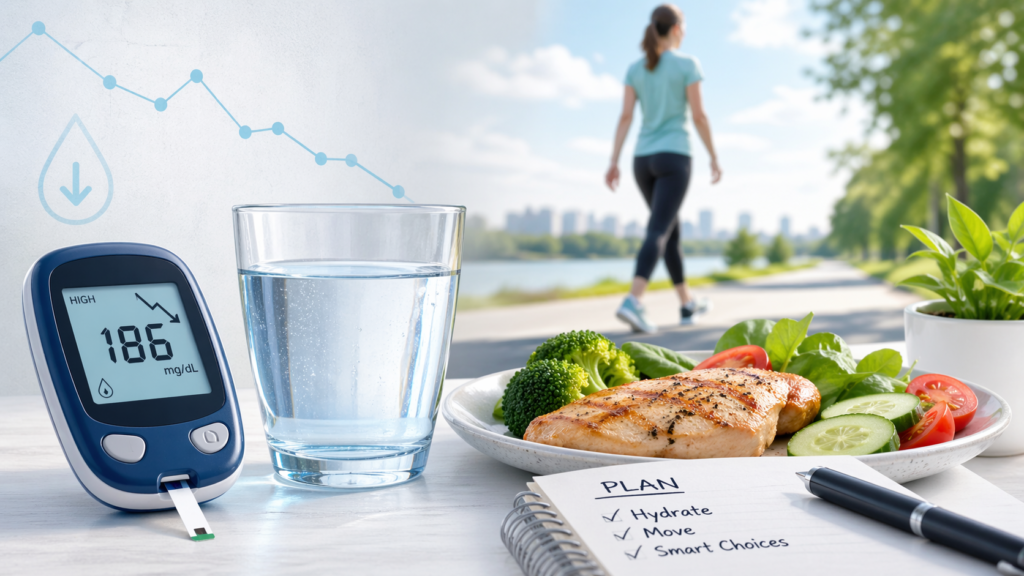
Part of the Blood Sugar Control section of the Blood Sugar Health Hub.
When blood sugar runs high, most people want the same thing: to bring it down as quickly as possible. That makes sense. But the goal should never be to lower it recklessly. The safest approach is to use simple, natural steps that may help bring glucose down in the short term while also knowing when a reading may be serious enough to need medical care. High blood sugar can happen for several reasons, including eating more than usual, illness, stress, and not having enough effective insulin.
Natural steps can sometimes help when your blood sugar is mildly to moderately elevated and you otherwise feel well. But if your blood sugar is very high, you have ketones, or you develop symptoms such as vomiting, stomach pain, fruity-smelling breath, or fast, deep breathing, that is no longer a “wait and see” situation. Those can be warning signs of diabetic ketoacidosis, which is a medical emergency.
If repeated spikes are happening, it is also worth looking deeper at the root cause. For many people, that leads back to insulin resistance, meal composition, activity patterns, sleep, stress, and long-term glucose habits rather than one single food or supplement.
What To Do First When Blood Sugar Is High
1. Stop adding more sugar for the moment
If your reading is high, avoid making it worse with juice, soda, sports drinks, sweets, or a large refined-carb snack. Choose water or another low-sugar drink instead, and give your body a chance to stabilize before you eat again. Public health guidance consistently recommends water or no-added-sugar drinks in place of sugary beverages.
2. Drink water
Hydration matters more than many people realize. When you are dehydrated, glucose can become more concentrated in the bloodstream, which can push readings higher. Plain water is the best first choice if your blood sugar is high and you are trying to support your body naturally.
3. Take a light walk if it is safe
Gentle movement can help some people bring blood sugar down, especially after eating. Research reviews suggest that post-meal exercise and light walking can improve postprandial glucose control. A short, easy walk is usually a better choice than an intense workout when your numbers are elevated.
4. Follow your normal medication plan
If your clinician has given you a correction plan or medication routine, follow that plan rather than improvising. Do not double up on medicine or start “stacking” doses on your own. This is especially important if you use insulin or medicines that can cause low blood sugar, such as sulfonylureas.
5. Recheck and monitor how you feel
A single reading matters, but the pattern matters more. If your blood sugar is not coming down, if it keeps climbing, or if you start feeling unwell, treat that as important information rather than pushing through and hoping it passes. Persistent highs deserve attention.
When You Should Not Exercise To Lower Blood Sugar
Exercise is not always the right answer.
The American Diabetes Association advises that if your blood glucose is above 240 mg/dL, you should check for ketones before exercising. If ketones are present, do not exercise, because activity can drive blood sugar even higher in that setting. This is one of the most important safety rules in the entire “how to lower blood sugar fast” discussion.
That means a light walk may help in some situations, but it is not appropriate in every situation. If you feel sick, have ketones, or have symptoms of diabetic ketoacidosis, skip exercise and get medical help.
Signs High Blood Sugar May Be Becoming Dangerous
High blood sugar does not always feel dramatic at first. Common symptoms can include increased thirst, frequent urination, fatigue, hunger, and blurry vision. Those symptoms can be mild at first, which is why people sometimes ignore them.
More serious warning signs include:
- nausea or vomiting
- stomach pain
- dry mouth or dry skin
- fruity-smelling breath
- fast, deep breathing
- worsening weakness or confusion
These are red flags for possible diabetic ketoacidosis. High ketones are considered an emergency warning sign, and the CDC advises urgent evaluation when that happens.
Natural Ways To Support a Faster Drop Over the Next Few Hours
If your reading is elevated but you feel okay and there are no red flags, these are the most sensible natural steps to focus on:
Choose water over calories and sugar
Do not “treat” high blood sugar with more liquid sugar. Water, sparkling water, or unsweetened beverages are the safer direction.
Move lightly instead of intensely
A calm walk is often more appropriate than hard training when sugar is running high. If you want a longer-term plan for activity and glucose stability, see natural strategies to lower blood sugar and natural strategies to improve insulin sensitivity.
Keep your next meal simple
The next meal after a high reading should usually be built around protein, fiber, and minimally processed foods instead of refined carbs and sugary drinks. You do not need a “perfect” meal. You need a steadier one. That is one reason the broader Blood Sugar Diet section matters so much for prevention.
Reduce stress instead of spiraling
Stress itself can contribute to high blood sugar. Panicking about the number can make the moment feel worse. Take a breath, hydrate, move if appropriate, and focus on the next smart action instead of overcorrecting.
What Not To Do When Blood Sugar Is High
Do not do an intense workout with ketones or when you feel unwell
This is one of the clearest mistakes to avoid. If blood sugar is above 240 mg/dL and ketones are present, exercise is not the answer.
Do not take extra medicine without a plan
Taking more insulin or more glucose-lowering medication than prescribed can swing you the other way and create hypoglycemia. Low blood sugar can cause shakiness, dizziness, confusion, fast heartbeat, and in severe cases loss of consciousness or seizures.
Do not drink juice or soda unless you are actually low
Juice is used for low blood sugar, not high blood sugar. When glucose is already elevated, sugary drinks usually move things in the wrong direction.
Do not ignore repeated spikes
If your blood sugar keeps spiking, the issue is probably not just one meal. It may be time to look at insulin resistance, daily carbohydrate load, sleep, stress, medication timing, illness, or an underlying pattern. Start with what insulin resistance is and then work through your broader Blood Sugar Management Guide.
The Real Goal Is Not Just Lowering It Fast. It Is Preventing The Next Spike.
Quick fixes are useful, but they are never the whole picture.
If you are constantly searching for how to lower blood sugar fast, the more valuable question may be: why does it keep rising in the first place? The long-term answer usually involves better meal structure, more consistent movement, improved insulin sensitivity, and understanding your personal triggers. That is where lasting control comes from.
To go deeper, explore:
- How to Lower Blood Sugar Naturally: Complete Guide to Fast & Long-Term Control
- Natural Strategies to Lower Blood Sugar
- What Is Insulin Resistance?
- Blood Sugar Management Guide
FAQs
1. What is the fastest natural way to lower blood sugar?
The safest fast natural steps are usually to stop consuming sugar, drink water, and take light movement such as a gentle walk if you feel well and do not have ketones. If your blood sugar is very high or you feel sick, medical advice may be needed instead.
2. Can walking lower blood sugar quickly?
It can help in some situations, especially after eating. Research reviews show post-meal walking and light activity can improve glucose control. But if your blood glucose is above 240 mg/dL, check ketones first, and do not exercise if ketones are present.
3. Should I drink water when my blood sugar is high?
Yes, plain water is usually a smart first step. Dehydration can make blood sugar readings look higher, and water is the best no-sugar option for hydration.
4. What should I avoid eating when my blood sugar is high?
Avoid sugary drinks, sweets, and large refined-carb meals while the number is elevated. A steadier next choice is usually protein, fiber, and minimally processed food.
5. When should I check ketones?
Many experts advise checking ketones when blood glucose is above 240 mg/dL, especially if you are sick or if the number stays high.
6. What are signs high blood sugar is becoming an emergency?
Warning signs include vomiting, stomach pain, fruity-smelling breath, fast or deep breathing, dehydration, and high ketones. These can signal diabetic ketoacidosis and need urgent care.
7. Can stress raise blood sugar?
Yes. Stress is one of the recognized reasons blood sugar can rise.
8. Can insulin or diabetes medicine lower blood sugar too much?
Yes. Insulin and some glucose-lowering medicines can cause hypoglycemia, which is why you should not take extra doses unless your clinician has specifically told you how to do that safely.
9. What does low blood sugar feel like?
Low blood sugar may cause shakiness, dizziness, hunger, irritability, confusion, headache, or a fast heartbeat. Severe lows can be dangerous.
10. What if my blood sugar keeps spiking often?
Repeated spikes usually mean the problem is bigger than one food or one bad day. It is worth looking at insulin resistance, meal structure, movement, sleep, stress, and your overall blood sugar plan.
Want Better Blood Sugar Control Beyond Quick Fixes?
Lowering blood sugar fast can help in the moment, but lasting results usually come from understanding the bigger picture. Explore the full control guide, learn what may be driving repeated spikes, and build a smarter long-term plan.
Written by Blood Sugar Insider Editorial Team
Health researchers and writers specializing in blood sugar control, metabolic health, and evidence-based nutrition.
Our editorial team creates evidence-based content designed to help readers understand blood sugar balance, prevent spikes, and support long-term metabolic health using science-backed strategies.
Medically Reviewed for Accuracy
This content has been reviewed for accuracy and clarity by the Blood Sugar Insider Medical Review Team, using current clinical research and evidence-based guidelines.
Our process ensures that information related to blood sugar, metabolism, and health strategies aligns with current scientific understanding and evidence-based practices.
View our Editorial Policy →