
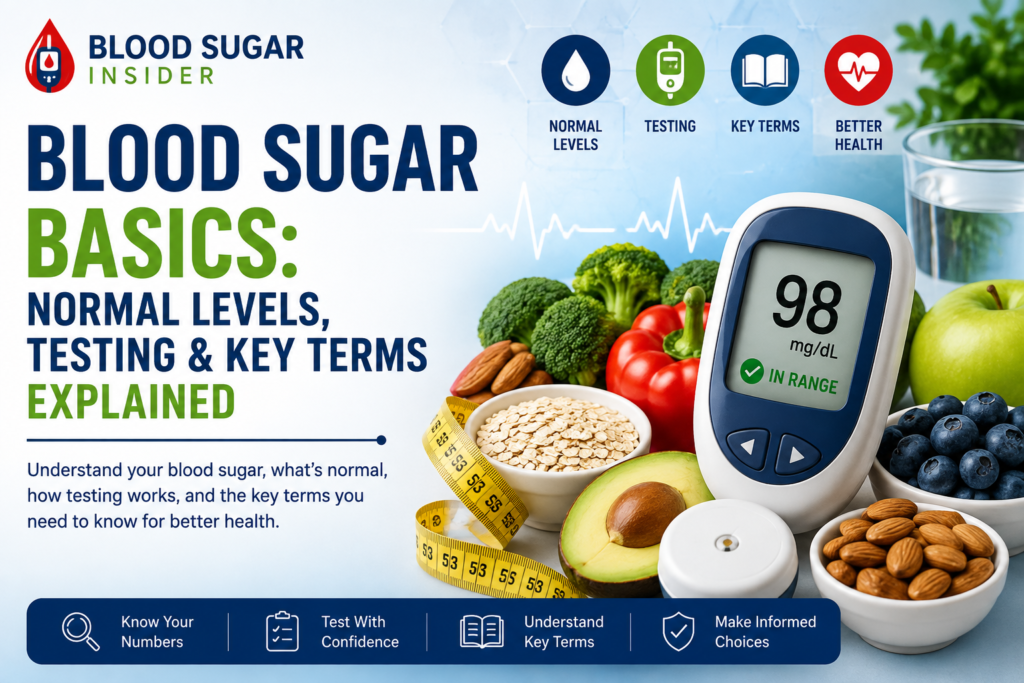
If you are trying to understand blood sugar for the first time, this blood sugar basics guide is the best place to start. It gives you a clear foundation for the most important concepts, including normal glucose ranges, fasting blood sugar, A1C, post-meal readings, and what different results may actually mean. For a practical starting point, you can also read What Are Normal Blood Sugar Levels by Age?, which helps put the numbers into context right away.
Many people only begin looking into blood sugar after a borderline test, unexplained fatigue, cravings, frequent urination, or a sense that something feels off. But numbers alone do not tell the whole story. Blood sugar is closely tied to how well your body responds to insulin, which is why deeper issues like insulin resistance often sit behind rising glucose long before diabetes is diagnosed.
This page is designed to help readers understand:
- what blood sugar is
- what normal numbers look like
- how fasting glucose differs from A1C
- what “prediabetes” means
- when numbers may be too high or too low
- where to go next inside Blood Sugar Insider
What Is Blood Sugar?
Blood sugar, also called blood glucose, is the amount of glucose circulating in your bloodstream. Your body uses glucose for energy, and insulin helps move that glucose from the blood into cells. In type 2 diabetes, the body does not use insulin well, which is why glucose can stay elevated over time. That impaired response is called insulin resistance.
This is why blood sugar is not just about sugar itself. It is also about:
- insulin response
- meal composition
- movement
- sleep
- stress
- liver function
- overall metabolic health
For a deeper root-cause explanation, start with What Is Insulin Resistance.
The 3 Main Blood Sugar Tests to Know
1. Fasting Blood Sugar
A fasting blood sugar test measures glucose after at least 8 hours without food or drink other than water. It is often the first test used to screen for prediabetes or diabetes. The CDC’s standard diagnostic ranges are:
- Normal: 99 mg/dL or below
- Prediabetes: 100 to 125 mg/dL
- Diabetes: 126 mg/dL or above
2. A1C
The A1C test shows your average blood sugar over roughly the past 3 months. It does not require fasting, which is one reason it is commonly used in screening and long-term monitoring. Standard CDC ranges are:
- Normal: below 5.7%
- Prediabetes: 5.7% to 6.4%
- Diabetes: 6.5% or above
3. Oral Glucose Tolerance Test
This test checks how your body handles a glucose load over time. It can catch glucose problems that are not always obvious on a fasting test alone. Standard CDC ranges for the 2-hour result are:
- Normal: below 140 mg/dL
- Prediabetes: 140 to 199 mg/dL
- Diabetes: 200 mg/dL or above
Quick Blood Sugar Range Guide
For most people, the core reference numbers are:
- Fasting blood sugar
- Normal: under 100 mg/dL
- Prediabetes: 100 to 125 mg/dL
- Diabetes: 126 mg/dL or above
- A1C
- Normal: under 5.7%
- Prediabetes: 5.7% to 6.4%
- Diabetes: 6.5% or above
- 2-hour glucose tolerance test
- Normal: under 140 mg/dL
- Prediabetes: 140 to 199 mg/dL
- Diabetes: 200 mg/dL or above
These are diagnostic ranges, not the same thing as day-to-day management targets for someone who already has diabetes. For many nonpregnant adults living with diabetes, the ADA notes common glucose targets of 80 to 130 mg/dL before meals and under 180 mg/dL 1 to 2 hours after the start of a meal, while also emphasizing that targets can vary by age and health status.
Why “Normal” Can Be Confusing
A lot of confusion comes from mixing up three different ideas:
Diagnostic numbers
These tell you whether your result is normal, prediabetes, or diabetes.
Daily targets
These help people with diabetes manage glucose over time.
Patterns
These explain how meals, stress, poor sleep, inactivity, or insulin resistance may be affecting your numbers even before a diagnosis is made. CDC guidance also notes that blood sugar targets can vary depending on age and additional health problems.
That is why one single reading never tells the whole story.
Common Signs Your Blood Sugar May Be Off
High blood sugar can cause symptoms such as:
- frequent urination
- increased thirst
- increased hunger
- fatigue
- blurred vision
- unexplained weight loss
- irritability or mood changes
Low blood sugar can cause symptoms such as:
- shaking
- sweating
- dizziness
- hunger
- nervousness
- confusion
- fast heartbeat
Some people have very mild symptoms or none at all, which is why testing matters.
Why Blood Sugar Rises in the First Place
Blood sugar usually rises because the body is becoming less efficient at keeping glucose in a healthy range. In type 2 diabetes and prediabetes, insulin resistance is a central mechanism: cells stop responding well to insulin, the pancreas works harder, and blood glucose gradually climbs.
That can be influenced by:
- poor sleep
- high stress
- excess abdominal fat
- low physical activity
- a diet built around highly refined carbs
- liver and metabolic dysfunction
This is why blood sugar basics should lead naturally into your deeper educational pages, especially the insulin resistance section.
When Should Someone Get Tested?
NIDDK notes that healthcare professionals use blood tests to diagnose diabetes and prediabetes, and the CDC stresses the importance of testing because many people have no clear symptoms early on. Testing becomes especially important when someone has symptoms, risk factors, or a previous borderline result.
Someone should take blood sugar seriously when:
- fasting glucose keeps coming back at 100 mg/dL or higher
- A1C is 5.7% or higher
- post-meal crashes or spikes happen often
- symptoms like thirst, urination, fatigue, or blurry vision keep recurring
- there is central weight gain or suspected insulin resistance
Where to Start Next
If you want to understand your numbers first:
Read: What Are Normal Blood Sugar Levels by Age?
If you want the root cause
Read: What Is Insulin Resistance
If you want to improve control naturally
Read: How to Lower Blood Sugar Naturally: Complete Guide to Fast & Long-Term Control
If you want the full next-step roadmap
Read: Blood Sugar Management Guide
Start With the Basics
Frequently Asked Questions
What does “blood sugar” actually mean?
Blood sugar, or blood glucose, is the amount of glucose circulating in your bloodstream. Your body uses it for energy, and insulin helps move it into cells.
What is considered a normal fasting blood sugar?
For most people, a fasting blood sugar under 100 mg/dL is considered normal. A fasting level from 100 to 125 mg/dL falls in the prediabetes range, and 126 mg/dL or higher falls in the diabetes range.
What does A1C measure?
A1C reflects average blood sugar over about the last 3 months and is commonly used to diagnose prediabetes and diabetes and to monitor long-term glucose control.
What is the difference between fasting blood sugar and A1C?
Fasting blood sugar is a single-time measurement after not eating for at least 8 hours, while A1C gives a longer-term average of blood glucose over roughly 3 months.
What symptoms can suggest high blood sugar?
Common symptoms include frequent urination, thirst, hunger, fatigue, blurry vision, and sometimes unexplained weight loss. Some people may have very mild symptoms or none at all.
Why is insulin resistance important in blood sugar problems?
Insulin resistance means cells do not respond well to insulin, so glucose stays in the bloodstream longer. Over time, that can raise blood sugar and increase the risk of prediabetes and type 2 diabetes.
Do blood sugar targets change with age?
For diagnosis, standard cutoffs are generally the same. But treatment goals for people already living with diabetes can vary based on age, health status, and risk of low blood sugar.
Is prediabetes serious?
Yes. CDC describes prediabetes as a serious health condition linked to higher risk of type 2 diabetes, heart disease, and stroke.
Ready to Understand Your Blood Sugar More Clearly?
Start with the basics, then move into the deeper root causes, daily strategies, and full management plan.
Written by Blood Sugar Insider Editorial Team
Health researchers and writers specializing in blood sugar control, metabolic health, and evidence-based nutrition.
Our editorial team creates evidence-based content designed to help readers understand blood sugar balance, prevent spikes, and support long-term metabolic health using science-backed strategies.
Medically Reviewed for Accuracy
This content has been reviewed for accuracy and clarity by the Blood Sugar Insider Medical Review Team, using current clinical research and evidence-based guidelines.
Our process ensures that information related to blood sugar, metabolism, and health strategies aligns with current scientific understanding and evidence-based practices.
View our Editorial Policy →