
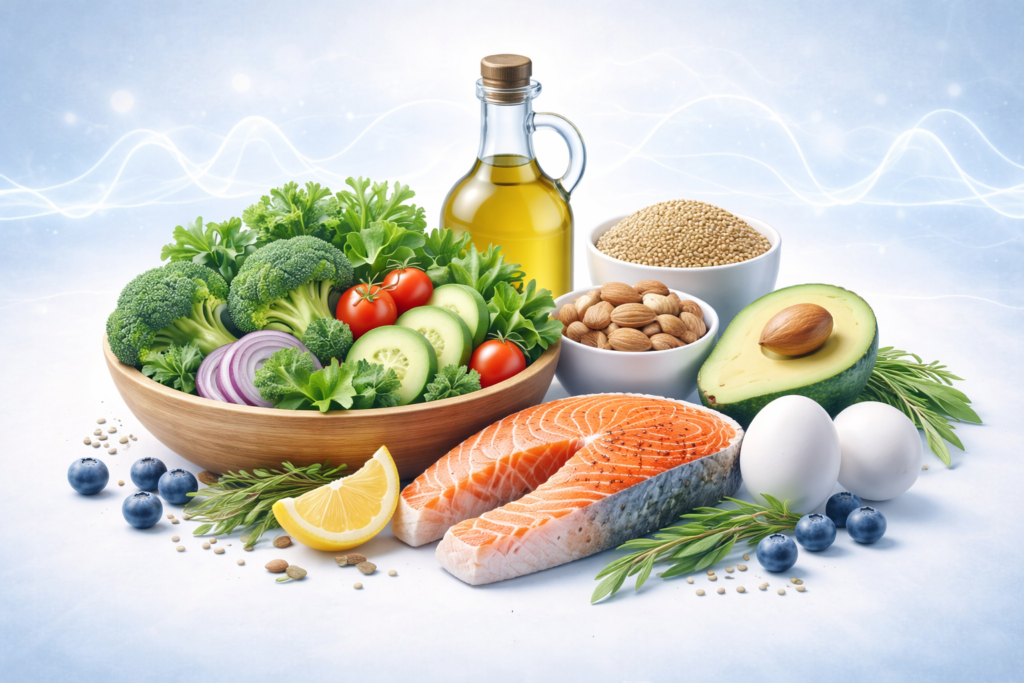
The best diet for insulin resistance focuses on stabilizing blood sugar, reducing insulin spikes, and improving how your body responds to glucose.
Insulin resistance is not just about sugar—it’s about how your body processes energy. The right foods can help restore balance, while the wrong ones can worsen the problem.
If you’re new to insulin resistance, start here: What is Insulin Resistance
Why Diet Matters for Insulin Resistance
Every time you eat, your body releases insulin.
When your diet is high in refined carbohydrates and sugar:
- Blood sugar spikes rapidly
- Insulin levels rise sharply
- Cells become less responsive over time
This is one of the main drivers of insulin resistance.
Learn more about root causes here: What Causes Insulin Resistance? (Full Breakdown)
The Core Principles of an Insulin Resistance Diet
To improve insulin sensitivity, your diet should:
- Minimize blood sugar spikes
- Prioritize whole, unprocessed foods
- Include balanced macronutrients
- Support metabolic health
Best Foods for Insulin Resistance
These foods help stabilize blood sugar and support insulin function.
1. High-Fiber Vegetables
- Leafy greens
- Broccoli
- Zucchini
- Cauliflower
Fiber slows glucose absorption and reduces spikes.
2. Healthy Fats
- Avocados
- Olive oil
- Nuts and seeds
Healthy fats help reduce insulin demand and improve satiety.
3. Lean Protein Sources
- Eggs
- Chicken
- Fish
- Greek yogurt
Protein helps regulate blood sugar and reduces cravings.
4. Low-Glycemic Fruits
- Berries
- Apples
- Pears
These provide nutrients without large glucose spikes.
5. Whole, Minimally Processed Carbohydrates
- Quinoa
- Oats
- Brown rice
Choose carbs that digest slowly and provide sustained energy.
Foods to Avoid with Insulin Resistance
Some foods worsen insulin resistance and should be limited.
1. Sugary Foods and Drinks
- Soda
- Candy
- Desserts
2. Refined Carbohydrates
- White bread
- Pastries
- Processed snacks
3. Ultra-Processed Foods
- Fast food
- Packaged meals
- Highly processed snacks
4. Frequent Snacking
Constant eating keeps insulin elevated throughout the day.
Meal Timing and Structure
How you eat matters just as much as what you eat.
- Eat balanced meals
- Avoid constant grazing
- Allow time between meals
Learn more here: Best Time to Eat for Blood Sugar Stability
Low-Carb vs Low-Glycemic Diet
Both approaches can help improve insulin resistance.
- Low-carb reduces total glucose load
- Low-GI focuses on slower digestion
See full comparison: Low-Carb vs Low-Glycemic Diet: Which Is Better?
Sample Day for Insulin Resistance
Breakfast: Eggs + avocado + greens
Lunch: Chicken salad with olive oil
Dinner: Salmon + vegetables
Snack (if needed): Nuts or Greek yogurt
How Diet Works With Other Factors
Diet is powerful—but not the only factor.
For best results, combine with:
- Exercise
- Sleep optimization
- Stress management
See full strategy here: Blood Sugar Management Guide
Key Takeaways
- Diet is one of the most important tools for reversing insulin resistance
- Focus on whole foods, fiber, protein, and healthy fats
- Avoid sugar, refined carbs, and ultra-processed foods
- Combine diet with lifestyle changes for best results
Related Articles
- Blood Sugar Diet Guide
- What Causes Insulin Resistance?
- How to Reverse Insulin Resistance Naturally
- Best Time to Eat for Blood Sugar Stability
❓ FAQ SECTION
What is the best diet for insulin resistance?
The best diet focuses on whole foods, fiber, healthy fats, and protein while minimizing sugar and refined carbohydrates.
Can diet reverse insulin resistance?
In many cases, yes. Diet changes can significantly improve insulin sensitivity.
Are carbs bad for insulin resistance?
Not all carbs are bad. Whole, low-glycemic carbohydrates can be included in moderation.
What foods should I avoid?
Avoid sugary foods, refined carbs, and ultra-processed foods.
How quickly can diet improve insulin resistance?
Some improvements can occur within weeks, but long-term consistency is key.
Ready to Put This Into Action?
The right diet can dramatically improve insulin sensitivity—but real results come from a complete system that combines food, movement, and lifestyle.

Written by Blood Sugar Insider Editorial Team
Health researchers and writers specializing in blood sugar control, metabolic health, and evidence-based nutrition.
Our editorial team creates evidence-based content designed to help readers understand blood sugar balance, prevent spikes, and support long-term metabolic health using science-backed strategies.
Medically Reviewed for Accuracy
This content has been reviewed for accuracy and clarity by the Blood Sugar Insider Medical Review Team, using current clinical research and evidence-based guidelines.
Our process ensures that information related to blood sugar, metabolism, and health strategies aligns with current scientific understanding and evidence-based practices.
View our Editorial Policy →