
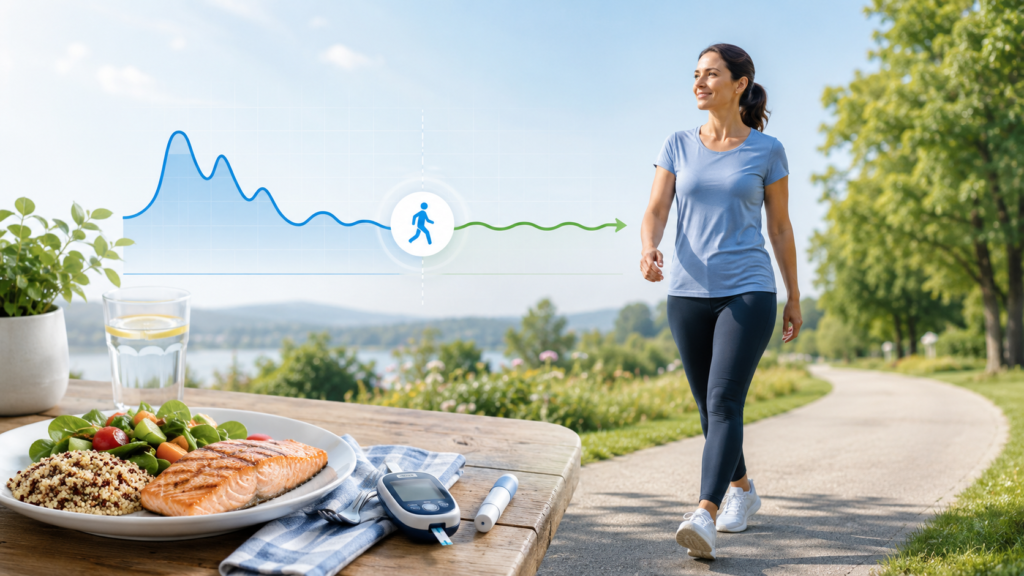
Walking after meals is one of the simplest natural strategies for lowering blood sugar without turning your life upside down. It is free, practical, and supported by both diabetes guidance and exercise research. The basic reason it works is straightforward: when you walk, your muscles use more glucose for energy, which can help reduce the amount of sugar circulating in your bloodstream after a meal. CDC notes that physical activity can lower blood sugar and even suggests checking your blood sugar before and after a walk because you will often see a lower number afterward.
This habit matters most after eating because that is when blood sugar typically rises. Reviews of postprandial exercise show that exercise done after meals can improve glucose control, and a 2023 review found walking has a greater acute effect on post-meal glucose when done as soon as possible after eating rather than before the meal or much later.
That does not mean you need a hard workout. In fact, one of the reasons walking after meals is so appealing is that it is realistic. A short walk after breakfast, lunch, or dinner may be enough to help blunt the glucose spike that follows a meal, especially one higher in carbohydrates. If you are working on broader glucose control, this strategy fits naturally with the main Blood Sugar Control guide and How to Lower Blood Sugar Fast.
Why Walking After Meals Helps Blood Sugar
After you eat, carbohydrates are broken down into glucose and released into the bloodstream. If insulin sensitivity is poor or the meal is large, glucose may rise more sharply. Walking creates an immediate demand for energy in your muscles, which helps move more glucose out of the blood and into muscle tissue. That is why post-meal walking can be especially useful for people dealing with blood sugar spikes, insulin resistance, prediabetes, or type 2 diabetes.
Research supports that mechanism in real-world meal settings. A 2022 study found that a 30-minute brisk walk after eating improved the glucose response after meals with different carbohydrate loads and different macronutrient compositions. In other words, the benefit was not limited to one very specific meal type.
This is also why walking after meals can feel more targeted than general exercise advice. It is not only about “moving more.” It is about timing movement around the period when blood sugar is most likely to rise. That timing piece is one reason post-meal walking is so often recommended as a practical blood sugar habit.
How Soon Should You Walk After a Meal?
The research does not point to one single perfect minute for everyone, but it does point in a clear direction: sooner is generally better than much later. A 2023 review concluded that walking or exercise has a greater acute beneficial impact on postprandial hyperglycemia when undertaken as soon as possible after eating. Other research summaries suggest that post-meal exercise started within the period when glucose is rising may be most useful for blunting the spike.
In practical terms, that usually means starting your walk within about 10 to 30 minutes after finishing a meal. You do not need to obsess over the exact number. The bigger win is building the habit consistently enough that you regularly move during the post-meal window rather than sitting for the next hour.
How Long Should You Walk?
A long walk can help, but you do not need an hour to get a benefit. Even short bouts of post-meal movement appear useful. CDC encourages starting small and even suggests beginning with a 10-minute walk after dinner. A recent trial also reported that a brief 10-minute walk immediately after a meal appears effective and feasible for managing hyperglycemia.
That makes 10 to 15 minutes a very practical target for most people. If you enjoy longer walks or want more overall activity, you can certainly do more. But if the habit feels too big, start with 10 minutes and build from there. For many people, a short walk they actually do every day is far more powerful than an ideal plan they never stick to.
How Hard Should the Walk Be?
You do not need to power walk aggressively for this to help. Light to moderate walking is usually enough. The goal is not to exhaust yourself. The goal is to get your body moving during the post-meal glucose rise. Walking is especially useful because it is low impact, accessible, and easy to repeat after ordinary meals.
That said, brisk walking may create a bigger glucose-lowering effect than extremely slow wandering, and the 2022 meal study specifically used brisk walking for 30 minutes. A good practical standard is a comfortable pace that feels purposeful but still allows you to talk.
Is Walking After Every Meal Better Than Only After Dinner?
It can be. If blood sugar control is your priority, walking after the meal that tends to spike you the most is a smart place to start. For some people that is breakfast, for others it is lunch or dinner. If your schedule allows it, short walks after multiple meals may help smooth glucose patterns across the day rather than only once in the evening.
But do not let perfection stop you. If you can only commit to one walk a day, a consistent post-dinner walk is still worthwhile. CDC specifically uses the example of a 10-minute walk after dinner as an easy way to get started.
Who May Benefit Most From Walking After Meals?
This strategy may be especially helpful for people who:
- notice post-meal blood sugar spikes
- have insulin resistance or prediabetes
- live with type 2 diabetes
- sit for long periods after eating
- want a simple, low-cost habit that supports better glucose control
It can also fit well into a broader routine for improving insulin action. If that is your bigger goal, pair this page with How to Improve Insulin Sensitivity Naturally and What Is Insulin Resistance?.
When to Be Careful
Walking after meals is usually safe, but it is not something to do mindlessly if you take glucose-lowering medication. NIDDK warns that physical activity often lowers blood glucose, and low blood glucose can last for hours or even days after activity. The risk is higher if you use insulin or medicines such as sulfonylureas.
That means if you have diabetes and use medication that can cause lows, you should pay attention to how your body responds. NIDDK advises checking blood glucose before, during, and right after physical activity and talking with your health care professional about the best times of day to be active and whether your plan needs adjustment.
You should also be cautious if you feel unwell after meals, have significant neuropathy, foot problems, balance issues, or another condition that changes what types of exercise are safe for you. NIDDK specifically advises talking with a health care professional before starting new activity or changing your routine.
Walking After Meals vs. Sitting After Meals
This is where the habit becomes surprisingly powerful. Sitting still after a meal gives your body less help handling the glucose load you just consumed. Walking, even briefly, shifts you out of that passive state and helps the body use glucose more actively. Reviews focused on postprandial exercise argue that the post-meal period is a particularly valuable time to interrupt sitting and target blood sugar control.
This is also why walking after meals pairs well with better meal choices rather than replacing them. A walk after a high-carb meal may help soften the spike, but you will usually get the best results when you combine walking with smarter meal composition, better portion control, and improved insulin sensitivity over time. See also Glycemic Index Guide and Blood Sugar Diet.
A Simple Walking-After-Meals Plan
If you want to make this habit practical, keep it simple:
Week 1
Walk for 10 minutes after your biggest meal of the day.
Week 2
Walk for 10 to 15 minutes after two meals when possible.
Week 3 and Beyond
Aim to make post-meal walking part of your regular daily routine, especially after meals that tend to raise your blood sugar more. CDC recommends building activity into your daily routine and making it a habit rather than treating it like an occasional event.
Bottom Line
Walking after meals is one of the easiest natural strategies for lowering blood sugar fast because it targets the exact period when blood sugar tends to rise. You do not need a gym, a supplement, or a perfect routine. In many cases, a short walk after eating is enough to help improve the post-meal glucose response, and doing it soon after the meal appears to work better than waiting much longer.
The real power of this habit is that it is sustainable. It is simple enough to repeat, flexible enough to fit normal life, and strong enough to matter when done consistently. If you want a bigger glucose-control system around it, continue with How to Lower Blood Sugar Naturally, How to Improve Insulin Sensitivity Naturally, and the Blood Sugar Management Guide.
Want Better Blood Sugar Control Without Overcomplicating It?
Walking after meals is one of the simplest habits you can build for steadier glucose. Pair it with a smarter full plan for even better long-term results.
FAQ
Does walking after meals really lower blood sugar?
Yes. Physical activity helps muscles use more glucose, and CDC notes that you will often see a lower blood sugar reading after a walk. Research on post-meal walking also shows improved postprandial glucose control.
How soon after eating should I walk?
Sooner is generally better than much later. Reviews suggest post-meal walking has the strongest acute effect when done as soon as possible after eating, so many people aim for roughly 10 to 30 minutes after a meal.
How long should I walk after meals?
Ten minutes is a realistic starting point, and longer walks can also help. CDC specifically suggests starting with a 10-minute walk after dinner.
Is walking after meals better than walking before meals?
For blood sugar control, post-meal walking often appears more effective because it targets the glucose rise that happens after eating. Review evidence supports a stronger acute effect when walking is done after the meal.
Do I need to walk briskly?
Not necessarily. Light to moderate walking can still help, though brisk walking may create a larger effect in some studies. The key is regular movement, not maximum intensity.
Is walking after meals good for prediabetes or insulin resistance?
It can be. This strategy is especially relevant for people trying to reduce post-meal spikes, improve insulin sensitivity, or support better glucose control over time.
Can walking after meals cause low blood sugar?
It can, especially if you use insulin or sulfonylureas. NIDDK warns that physical activity often lowers blood glucose and that lows can last for hours or days after activity.
Should I walk after every meal?
You do not have to, but it can help. Start with the meal that tends to raise your blood sugar the most or the one that best fits your routine.
What if I cannot walk for long?
Short walks still count. Even 10 minutes can be a strong starting point. Consistency matters more than making the walk long.
Is walking after meals enough on its own?
It is a powerful habit, but it works best as part of a wider plan that includes meal quality, sleep, stress control, and overall activity.
Related Articles
- How to Lower Blood Sugar Naturally: Complete Guide to Fast & Long-Term Control
- How to Lower Blood Sugar Fast (Naturally & Safely)
- How to Improve Insulin Sensitivity Naturally
- What Is Insulin Resistance?
- Glycemic Index Guide: How to Use It for Blood Sugar Control
- Blood Sugar Management Guide
Start Improving Your Blood Sugar Today
While this article is being expanded, you can begin with our structured system to stabilize blood sugar and prevent spikes.
Medical References

Written by Blood Sugar Insider Editorial Team
Health researchers and writers specializing in blood sugar control, metabolic health, and evidence-based nutrition.
Our editorial team creates evidence-based content designed to help readers understand blood sugar balance, prevent spikes, and support long-term metabolic health using science-backed strategies.
Medically Reviewed for Accuracy
This content has been reviewed for accuracy and clarity by the Blood Sugar Insider Medical Review Team, using current clinical research and evidence-based guidelines.
Our process ensures that information related to blood sugar, metabolism, and health strategies aligns with current scientific understanding and evidence-based practices.
View our Editorial Policy →